
Dracut Farmhouse-Style Home and Garage
"It became clear that the nature of the site, it's location, the backdrop of the meadow and surrounding woods, kept pushing towards the image of a farmhouse." - Luis Lobao, Applied Form and Space

For Applied Form & Space Architects, LLC, Andover, MA © Joseph Ferraro, 2019
Client: Applied Form & Space / Luis Lobao (Architect)
3 Dundee Park, Suite B02, Andover, MA 01810 / 978.474.1945
Shoot Date: October 14, 2019
Location: Dracut, Massachusetts
Site: 3,200 sq. ft. (Home); 1,320 sq. ft. (Garage)
Style: Farmhouse with Shop/Garage Barn Design
Featured Highlights: Shop/Garage, Breakfast ("Gathering") Room
Photo Assistant: Tony Degrazia
Click here for the extended Gallery.
"It became clear that the nature of the site, it's location, the backdrop of the meadow and surrounding woods, kept pushing towards the image of a farmhouse." - Luis Lobao, Applied Form and Space
Introduction
When a longtime client calls with an assignment, featuring a farmhouse-style home with a garage designed as a barn, and wants to have it photographed during some of the best foliage days in New England, it's hard not to want to grab my camera and get out there first thing. New England is known for its distinct seasons and vibrant autumns. Having the opportunity to use these scenes as a natural backdrop is only possible during a short time, a mere two to three weeks of bright color if we're lucky. It's not long before a predictable, yet unexpected storm inevitably rips through the northeast and tears the colorful leaves to the ground.
The home happened to be in Dracut, MA, a border town sitting just below the State of New Hampshire. The architect, Luis Lobao from Applied Form and Space, actually grew up with the homeowner. This project endured a couple of revisions as the family grew, and their priorities shifted. I spoke with Luis to gather some more details and backstory that would not only support the images in this article but give us all some perspective from the design-side and highlight the problem solving that takes place for architects every day.
Planning Stages
"Having grown up in the neighborhood with one of the owners and being a current neighbor, the owners approached me to help realize their vision on a plot of land they had recently purchased. While outwardly different from the completed work, even during the initial design process, the owners' aesthetic taste gravitated towards timeless, simple forms inherent to the New England lifestyle."
It must have been the season because while Luis and I were talking about the project and determining what our goals were, I couldn't help but dream up a visual wishlist of my own. There's something about autumn in New England that slows the mind's pace a little bit, and maybe it's in witnessing the natural world around us calmly approach its winter dormancy. A lot of New Englanders, northern ones especially, like to pick-on the leaf peepers that travel from near and far to see the change of seasons. I know that deep down, they enjoy that morning coffee on the front porch, or on the docks pinned to lakes throughout the region, donning their thick sweaters while watching the geese race south, set to a backdrop of auburn, bright yellows, and tones of golden brown and orange. No one is immune.
But, color alone wasn't enough to entertain my wishes. I wanted to see some fog. I needed a fog. I've become a bit more interested in the atmosphere I present in my work. Analyzing and predicting weather has become an obsession. Just a clear, bright day doesn't cut it for me anymore. And, it's not just fog I'm after, I want mood.

For Applied Form & Space Architects © Joseph Ferraro, 2019
With the warm days and cold nights that take over northern-New England mid-autumn, I was hopeful that we might start the day with some fog. It so happened that Franklin was on to something with his "early-to-rise" quip because it paid off in dividends. Arriving just as blue-hour began, around 6:10 am, there was enough light in the sky to illuminate the barn-style garage, but even the Moon stayed around long enough to make a guest appearance. I wish all assignments could start so well.
Exterior
Although the home sits on acreage that was once farmland, the function of the garage was a space for the homeowner to build and to create. Growing up, "the owner would make customized bicycles, some to sell, but his favorites to keep. Now those were replaced with fully custom motorcycles and customized cars." It was clear to Luis, the homeowner's "vision of a working shop where the mechanically inclined owner can have his space was fundamental to this project.
The detached barn is a vehicle hobbyist's dream. Separate from the attached garage for the daily drivers, and it accommodates interior storage lifts allowing for storage of up to 4 vehicles. It also includes a tall center bay with a working lift for building and repairing vehicles. An exterior parking bay for the motorcycle's transportation trailer is also provided."

Though the initial focus for me, photographically, was the barn-style garage, it wasn't the only plan for photography that day. The home featured design elements that took into account the family's desires, but also played in symphony with its surroundings. It wasn't until I read Luis' words below that I began to understand the cadence of his creative process and tonal range of his problem-solving facility. As you read his words below and reference the photography, I find a contemplative mindset and a well-curated playlist help to tie all of these ideas together.
"The front farmer's porch is low to the ground eliminating needs for railings. Instead of traditional porch posts, beefier columns were used to give the monochromatic design more visual weight. An asymmetrical main gable provided an anchor and a visual clue to the main entry. The gambrel form along the longitudinal axis allows for the necessary usable space for the second-floor bedrooms. The sweeping curved rake of the southeast gambrel allows for an elegant transition to the farmer's porch roof. It responds to the curving road's approach, with its arcing profile dramatically angled toward it. It anchors the simple rhythm of the windows that sweep up, implying the interior stair. On the rear, a simple screen porch nestled between the house and the attached garage allows for summer enjoyment of the meadow and hills beyond."

Interior

For Applied Form & Space Architects © Joseph Ferraro, 2019
The first thing you notice when walking into the home is a large room, filled with sun, with windows looking out onto undeveloped land, lit up with the changing colors of the season. With the idea of creating an open concept, they did not want to compromise on charm. And, while the dining space just off the kitchen is in-and-of-itself its own identifiable space, the high ceilings and large windows allow the area to breathe and maintain that well-intentioned feeling of home.

"Meeting the owners' desire to have spaces that feel open without losing the homey feel that fully open concept spaces sometimes can. The breakfast room is flooded with natural light throughout the day and has become the owner's favorite room – so much so the architect now uses the term "gathering room" to describe these types of spaces. Natural light is a priority, achieved by using nearly 6' tall 6/0 windows throughout the main living level."
The high ceilings continue into the family room, divided from the kitchen only by the warmth of a see-through fireplace.
Challenges
All building projects inherently come with their own baggage. From issues with permits to last-minute changes, and budgets, to name a few. This project, however, took on new ground by changing the topography of the site to prepare a place for the home to rest.
"The biggest challenge came from the topography of the site, which required importing over 3,000 cubic yards of soil. The construction duration was approximately 14 months, from excavation to completion. Another interesting note is how, in addition to the architect, several other folks who grew up together or were somehow otherwise tied to the "old neighborhood" worked to complete this home. Among them, plasterer, electrician, plumbers were neighbors or childhood friends of the owners."
And, where is there any more personal a home project when you can get your friends to help you?
My best wishes to this family and their home, and that it may stay in the family for generations to come.
- Joe

For Applied Form & Space Architects © Joseph Ferraro, 2019
More about:
Luis F. Lobao, Architect, NCARB
Applied Form and Space, LLC, Andover, MA
Luis Lobao is a founding Principal and is responsible for all phases of project delivery. He has extensive experience in multifamily, office, retail, custom residential, accessibility, adaptive reuse, historic restoration, and institutional projects. Mr. Lobao received his Bachelor of Architecture degree from Wentworth Institute of Technology, College of Design and Construction. Mr. Lobao is NCARB certified and is registered to practice architecture in Massachusetts and New Hampshire. He serves as a member of the Green Building Commission in Lowell, MA. Several of his projects have received recognition from entities including the Boston Preservation Alliance and the Luxury Living Awards. (https://www.afsarch.com)

In Plain Sight
#Quarantinography was a working title for this post. I wasn't sure how to approach this next post during these abnormal times. Nor did I know just how eerie this photoshoot, on a Friday at rush hour in Boston, was going to feel. With everyone bravely adhering to the #stayhome order, I knew it would be quieter than usual. But, prepared with my PPE, I was ready for anything.

#Quarantinography was a working title for this post. I wasn't sure how to approach this next post during these abnormal times. Nor did I know just how eerie this photoshoot, on a Friday at rush hour in Boston, was going to feel. With everyone bravely adhering to the #stayhome order, I knew it would be quieter than usual. But, prepared with my PPE, I was ready for anything.
Though there were plenty of cars traveling beside me, on my way down from Salem towards Boston, once I exited the I-93 tunnel onto Purchase Street, it was as though time had stopped. Within the convolutedly-laid out streets of what is the financial district in Boston, in the shadows of brick and mortar giants, walk-signals chirped in concert with seagulls singing for an absent audience. Now, with my camera setup and viewpoints mapped out, it was time to wait for the sun to do its thing.

125 High Street, 2020 © Joseph Ferraro

125 High Street, 2020 © Joseph Ferraro

125 High Street, 2020 © Joseph Ferraro
As someone who's photography-style emphasizes control, over lighting, and composition, I am usually in a dance with the rhythm of the street among the public. But, without anyone to dance with, I had my buildings all to myself. While I wished for a bike messenger or a few cars with streaking headlights, this was a practice in presenting my subject in good light and less about action.
My goal was to photograph the available, street-level retail space at the corner of High and Pearl Streets. And, to showcase that space by placing it in context to the surrounding area to aid my clients in selling the lease to the best future occupant. Using my Canon 17mm and 24mm tilt-shift lenses, I carefully used perspective to entertain the viewer and map out the location.
I couldn't have asked for a better night in terms of lighting. There were only a few passing, wispy-clouds. The sun really delivered on a night that otherwise could've left me wanting for so much more. Not in the least, would I have preferred there to be no people at all. At least a few dozen would've helped to season these images with some much-needed signs of life.
And, it's a life I hope we get to enjoy in the company of so many others as soon as it's safe for all of us.
Stay well, Boston.

125 High Street, 2020 © Joseph Ferraro

125 High Street, 2020 © Joseph Ferraro

Licensing & Copyright: Part One
By design, operating as a freelance photographer means running a small business. Though there are many places for photographers to learn their craft, there are far fewer places to learn the business side of their venture. Focusing solely on their craft, a photographer may miscalculate how valuable their images are and miss out on revenue; resulting in placing unnecessary strain on their businesses. Supporting the sharing of information can only improve photographer-client relationships and strengthen business strategies that sustain viable revenue streams and support all of us in the business of commercial photography.
By design, operating as a freelance photographer means running a small business. Though there are many places for photographers to learn their craft, there are far fewer places to learn the business side of their venture. Focusing solely on their art, a photographer may miscalculate how valuable their images are and lose out on revenue, resulting in placing unnecessary strain on their businesses. Supporting the sharing of information can only improve photographer-client relationships and strengthen business strategies that sustain viable revenue streams and support all of us in the business of commercial photography.
Originally posted as an article on BLDUP.com, 4/8/2020
Licensing 101
In my previous article, Best Practices: Exterior Photography, I mention that after the planning and the building of a project is complete, it's time to document the work of all involved. Creating marketable images to share with your current and prospective clients is the final part of the build process (besides those never-ending punch lists). Hiring the right photographer for the job will result in photographs that will aid in future proposals and generate sales.
It's those sales that photographers should be most interested in generating for their clients. If a company uses photographs to promote their services through marketing, whether they pay for advertising or post on social media for free, those photographs are generating potential income. Photographers can improve the viability of their business by licensing their work to clients for commercial, promotional use.
How it Works
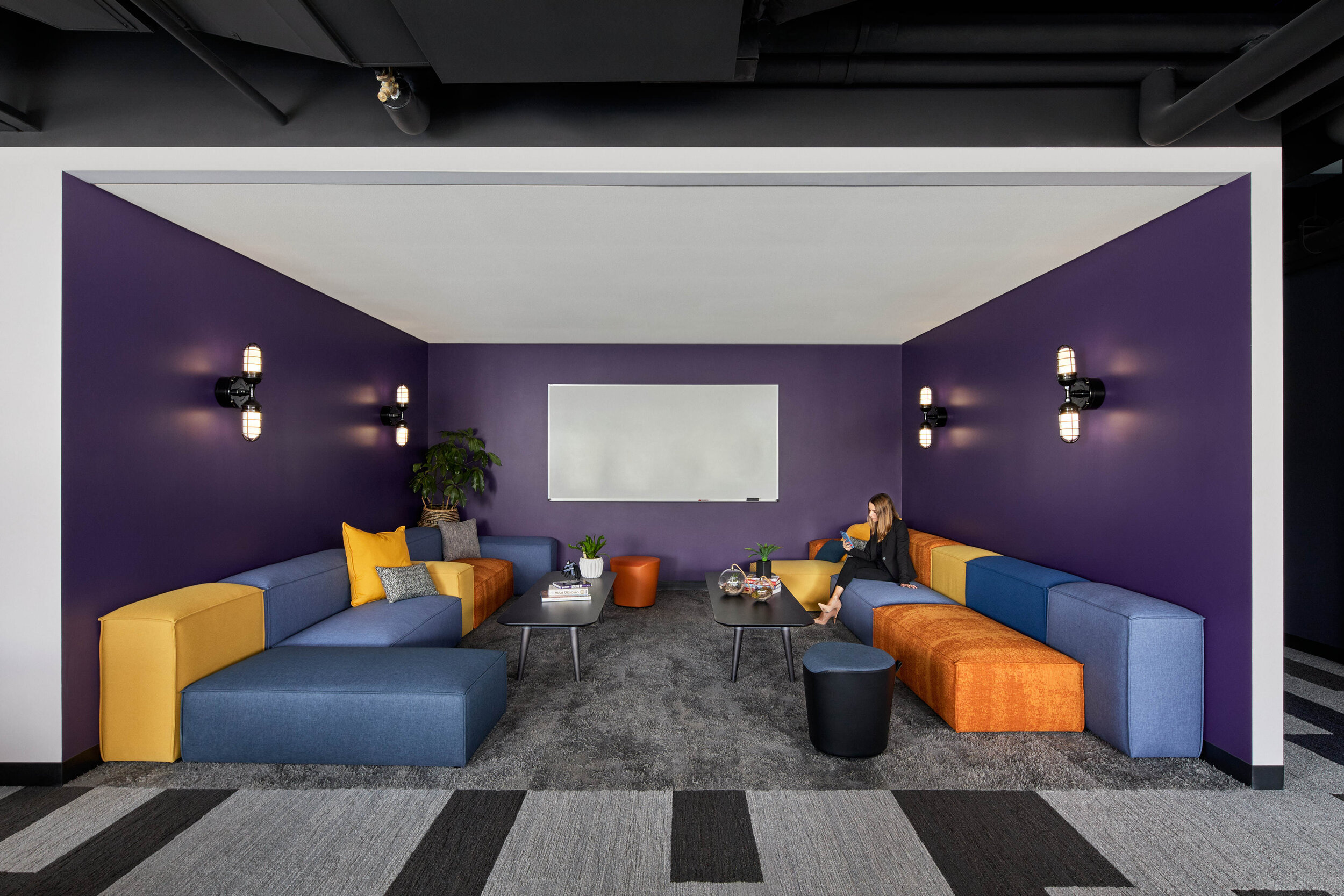
Distruptor Beam for Workflow Interiors © Joseph Ferraro
A photographer creates a work of intellectual property once they compose an image and press the shutter. Like other creative arts, copyright laws protect the work photographers create and therefore provides a means for a photographer to generate income from licensing usage rights for images to their clients.
Licensing is an agreement to issue a copy of the work generated by photographers in exchange for a royalty fee, granting the licensee the right to use the photography in ways defined by the photographer, for the length of time allowed by the agreement.
The Life of an Image
Current thought is that a photograph has a marketable lifespan of maybe a few years. It's been my experience that architectural firms can find a use for decade-old images if it helps illustrate a design concept to a potential client. So, in some licensing agreements, you may see licensing terms issued for as short as one year or as indefinite, perpetual use. Photographers who offer stricter terms may perceive a higher value for their work and expect a broader potential for future revenue by asking their clients to return year after year for a new license.
It has also become acceptable to issue a perpetual usage license that may price higher now but won't require the licensee to return to pay for more licensing when they need to use the image three or ten years from now. Either way, how a photographer licenses their work should be a reflection of their business strategy and their knowledge of their clients' market share and a project's potential to generate their client's revenue.
Commercial Use of Photography
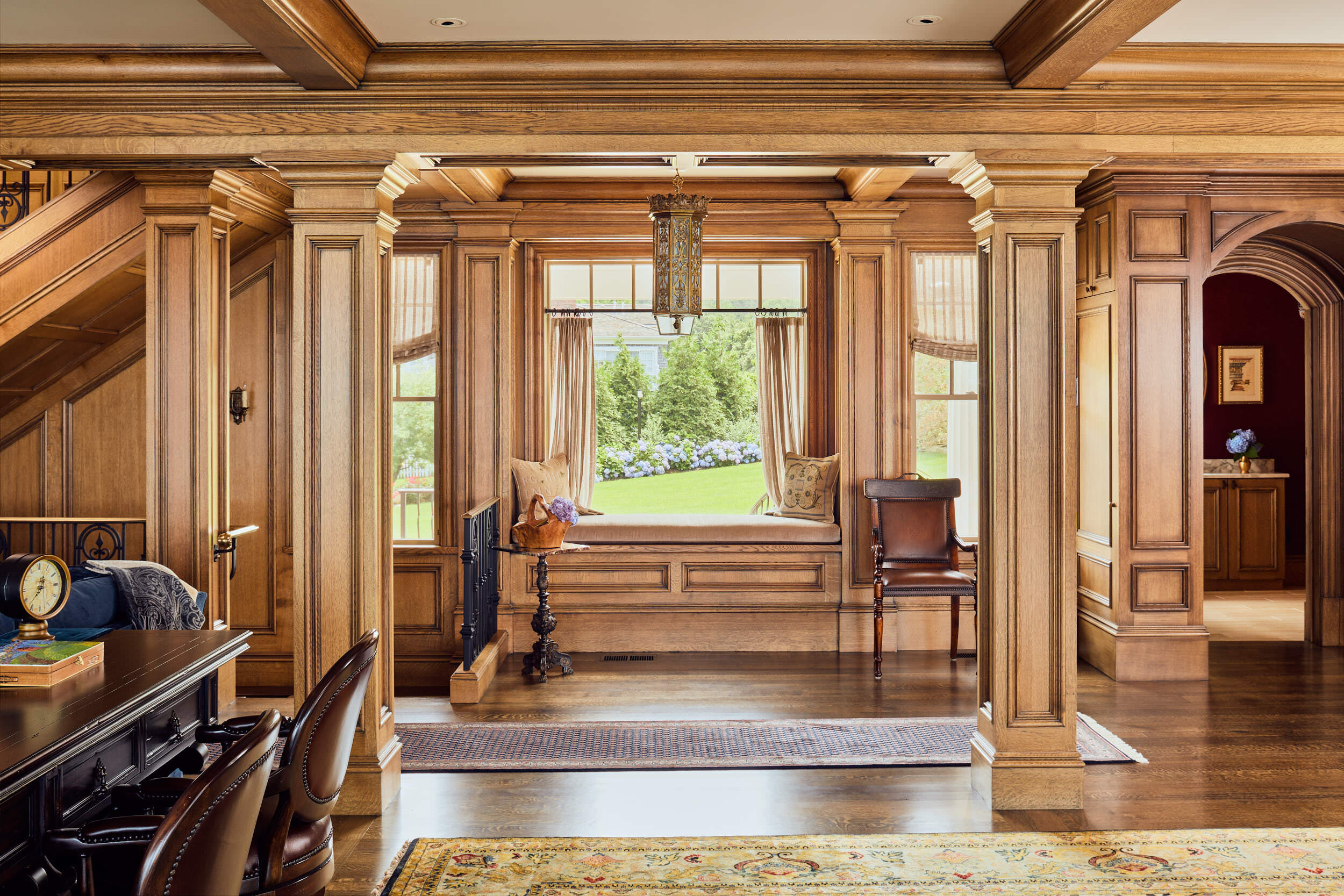
Applied Form & Space Architects © Joseph Ferraro
What a photographer perceives their work is worth is an age-old discussion that will vary by market, expertise, business structure, and most clearly confidence in their work. There are no clear standards in the way photographers price or grant terms for the use of their images. Some photographers combine licensing fees with their photography fees for each assignment, calling them "Creative Fees," so seeing a clear price per unit is not generally possible. And, other photographers bill their clients per image for usage rights.
What a photographer considers in pricing their work should include factors that separate them from the pack with value-added services. Such distinctions could consist of implementing more advanced camera technologies, showcasing more years of service as compared to their competitors, or by providing more efficient services than their competitors. Also, a photographer's locale and general knowledge of how their competitors price their work will indicate the market value of images. By maintaining a sustainable business model, a photographer can predictably work for the same clients year after year and create a protected habitat for their competitors.
A Dedicated Approach

A&B Burgers, Causeway St. for Boston Urban Partners © Joseph Ferraro
As my business grows, I have more assignments that now include multiple parties buying-in on projects from the start. By combining my fees into a Creative Fee and granting generous licensing terms, I can more easily distribute costs between all parties buying-in on a shoot and make the administrative end of my business streamlined and more uncomplicated for everyone involved.
I've included a copy of my estimate paperwork, providing a look at my licensing terms for my clients in the Boston area. Please have a look through my paperwork, as I believe transparency only helps my industry and can make my processes clearer to my future clients. If you have any questions, please don't hesitate to reach out by emailing me at hello@josephferraro.com or calling 617-335-8925.
Stay tuned for Part Two of this topic, where I'll cover Copyright and how I enforce my licensing agreements with my clients and protect my business.
Attachment: Assignment Estimate