
Is licensing the enemy? Or are other photographers?
For the second time in about six months, I've had to explain to new clients why they can't just "have the images" and "use them however they want."
For the second time in about six months, I've had to explain to new clients why they can't just "have the images" and "use them however they want."

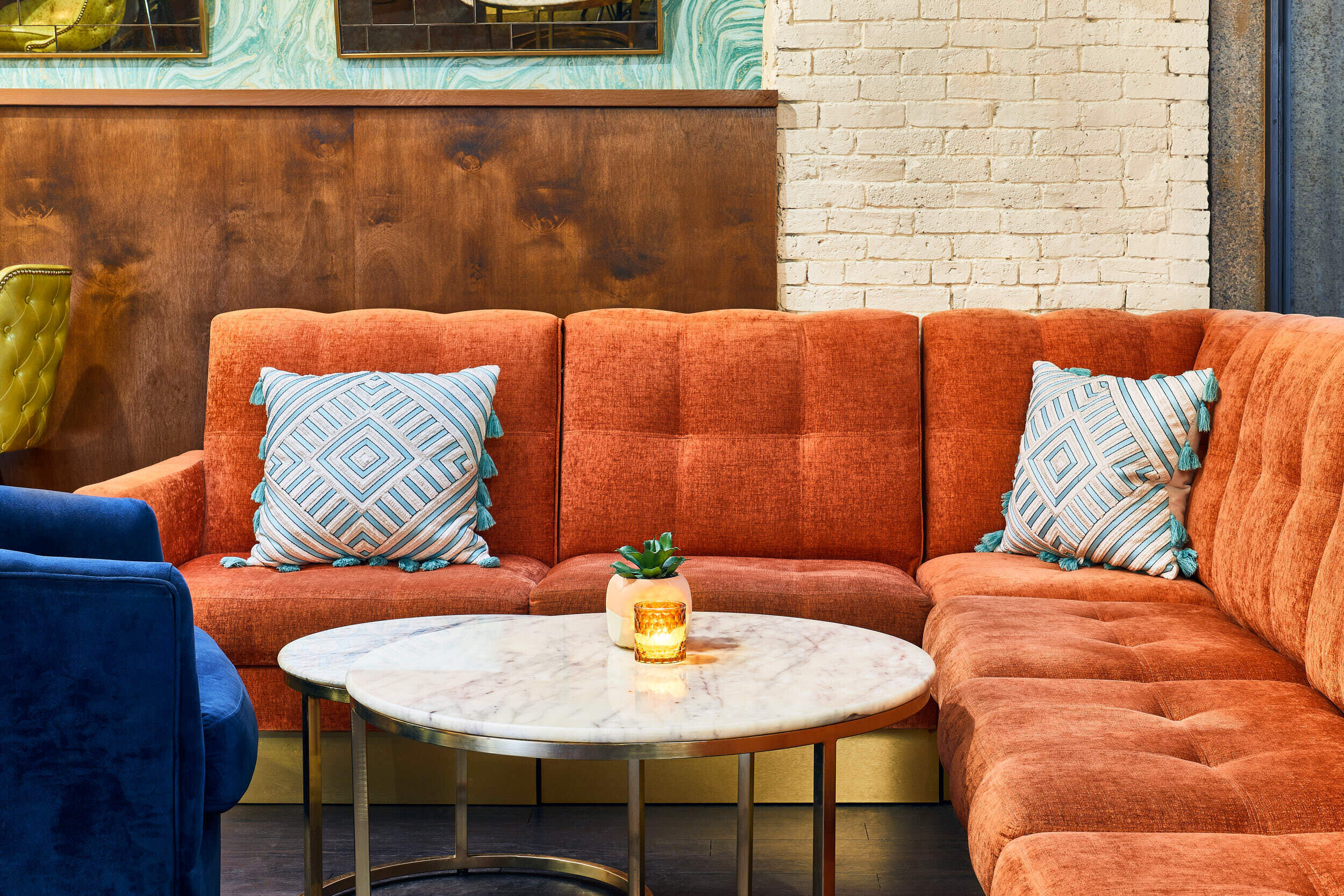
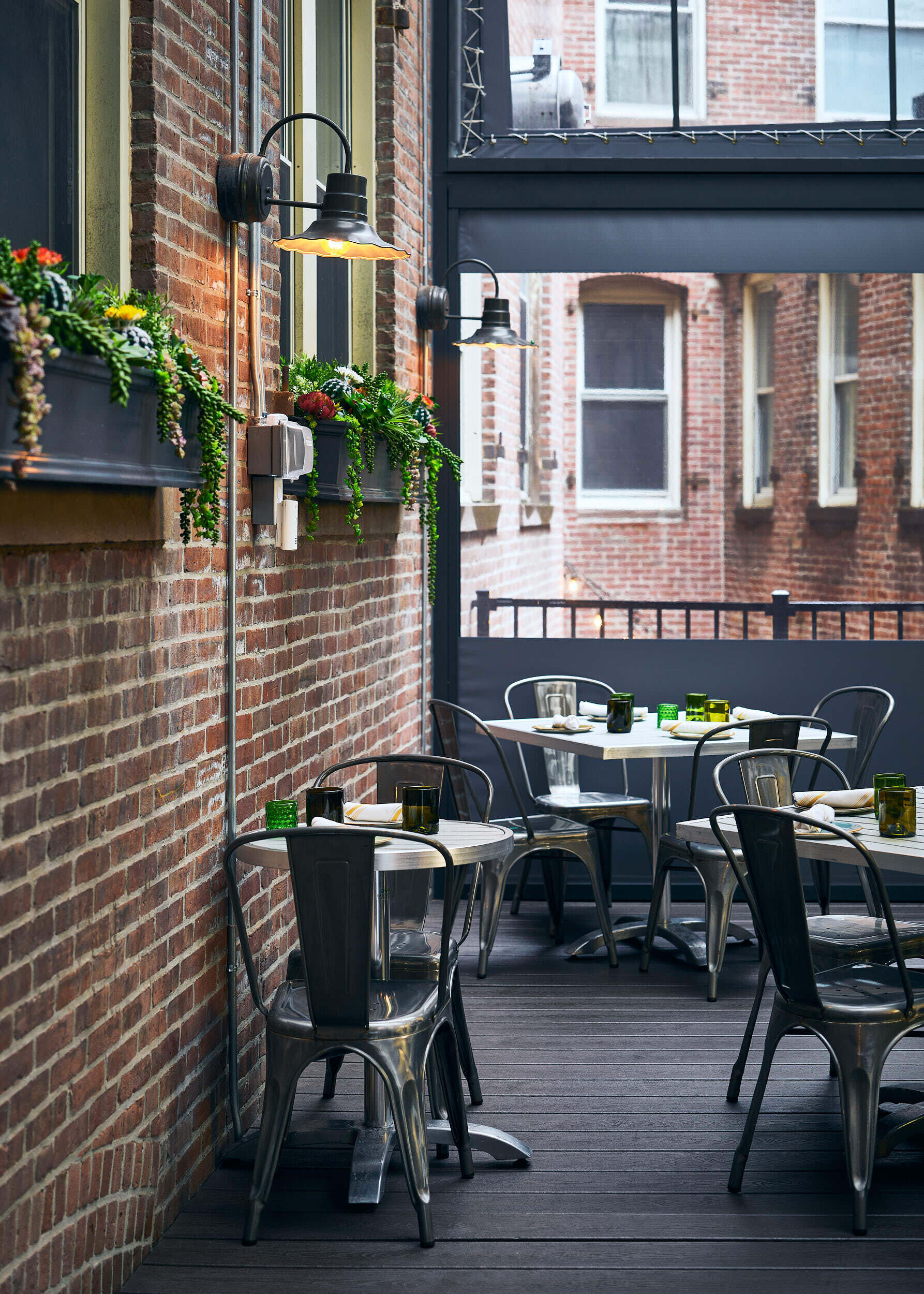
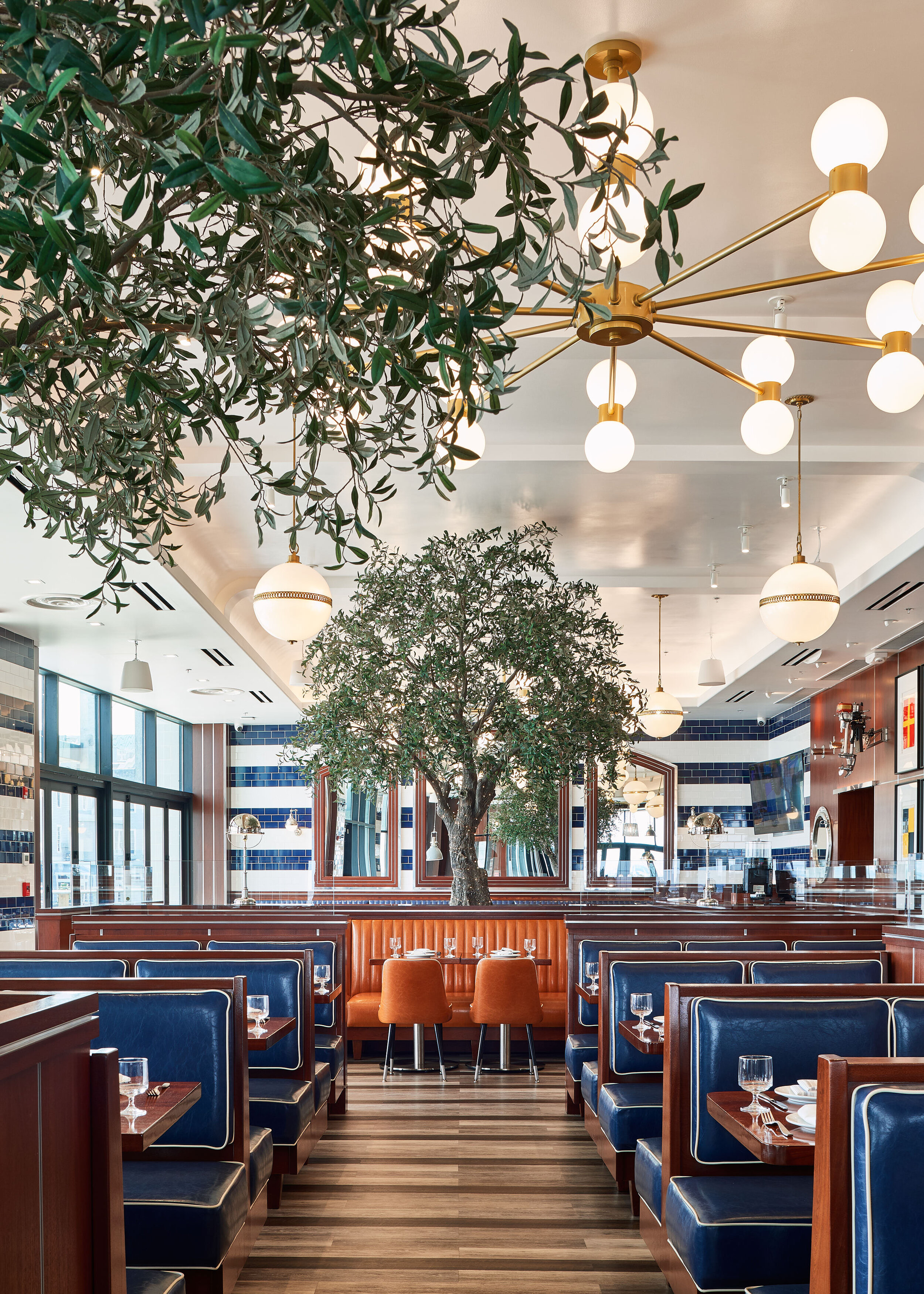
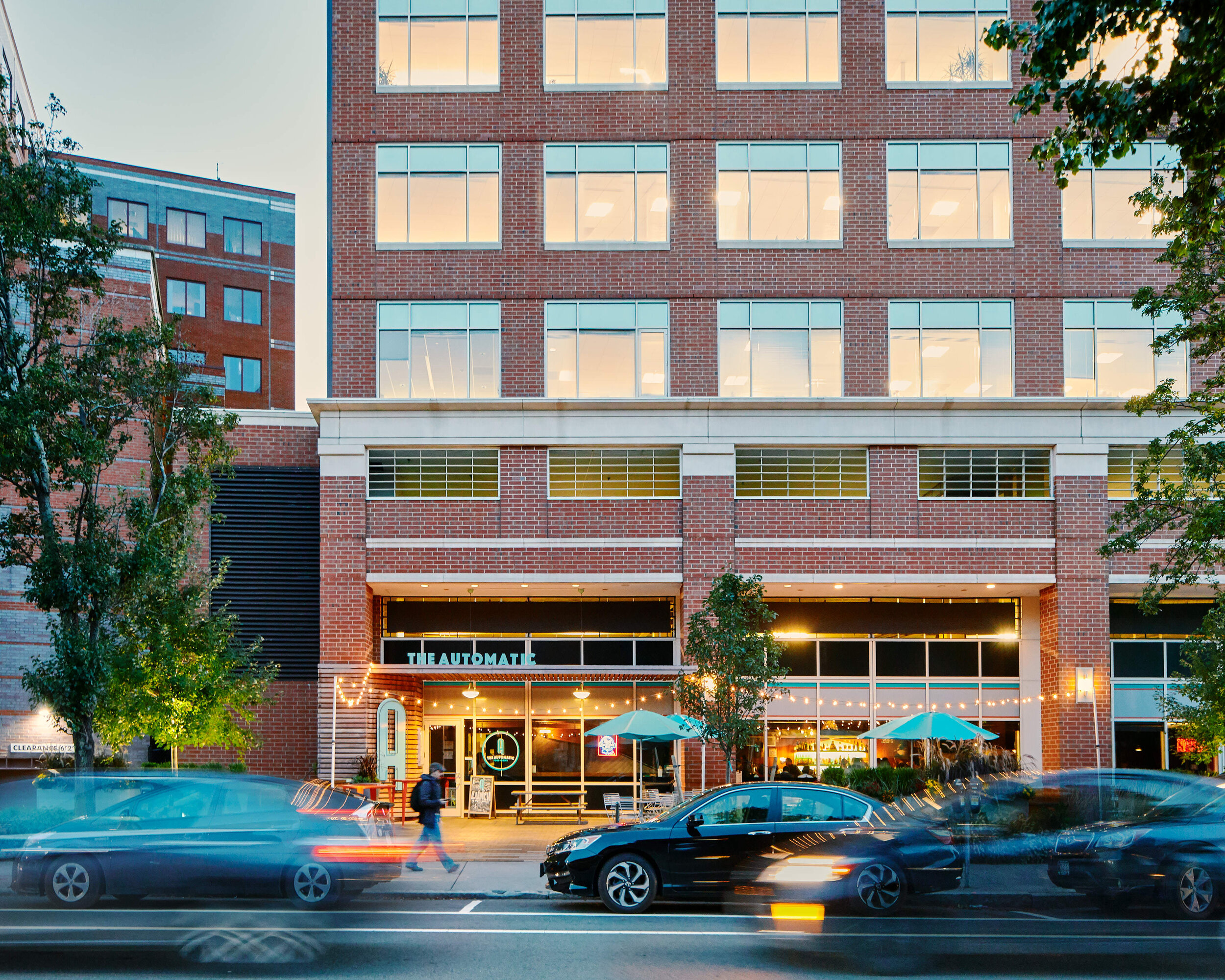
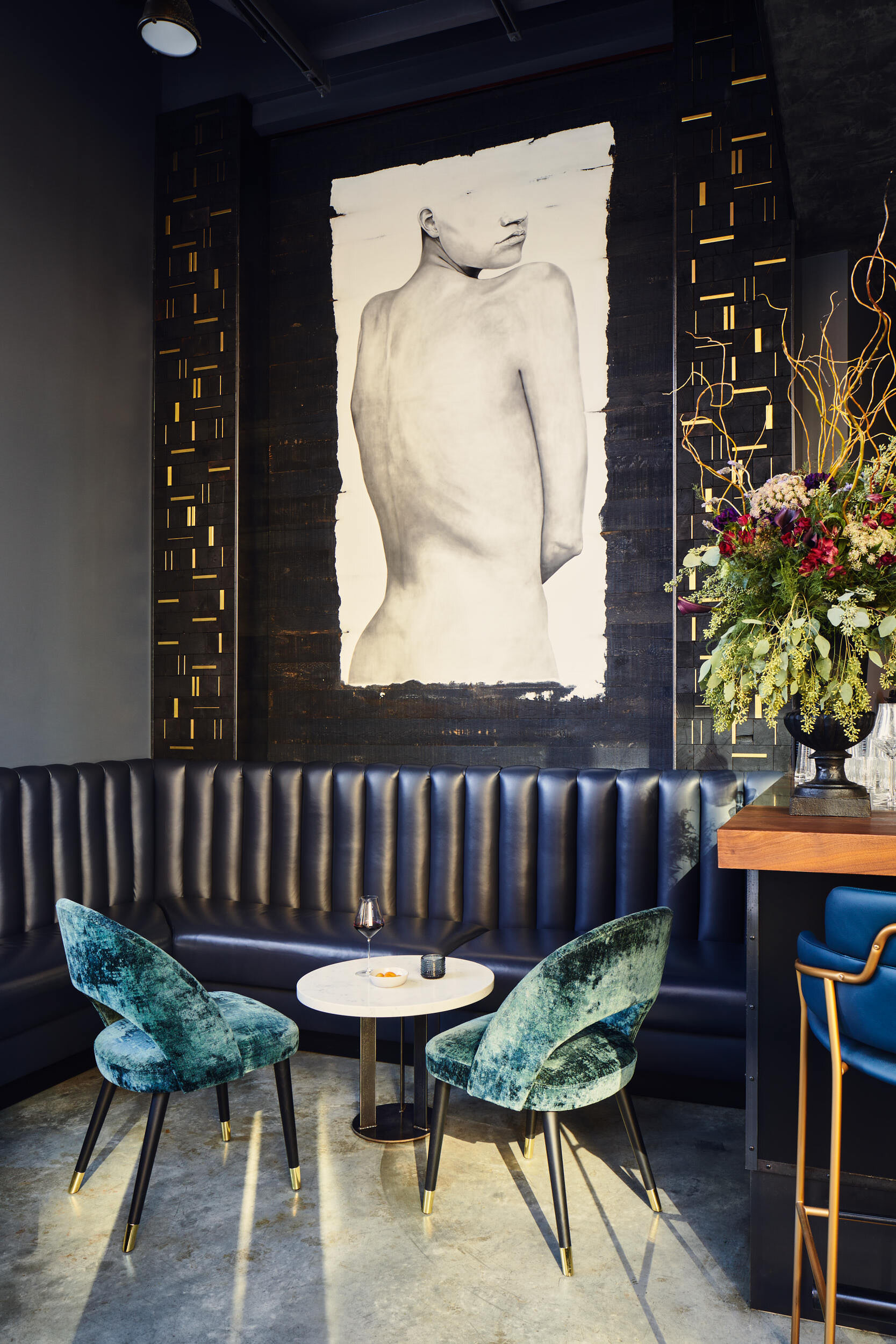
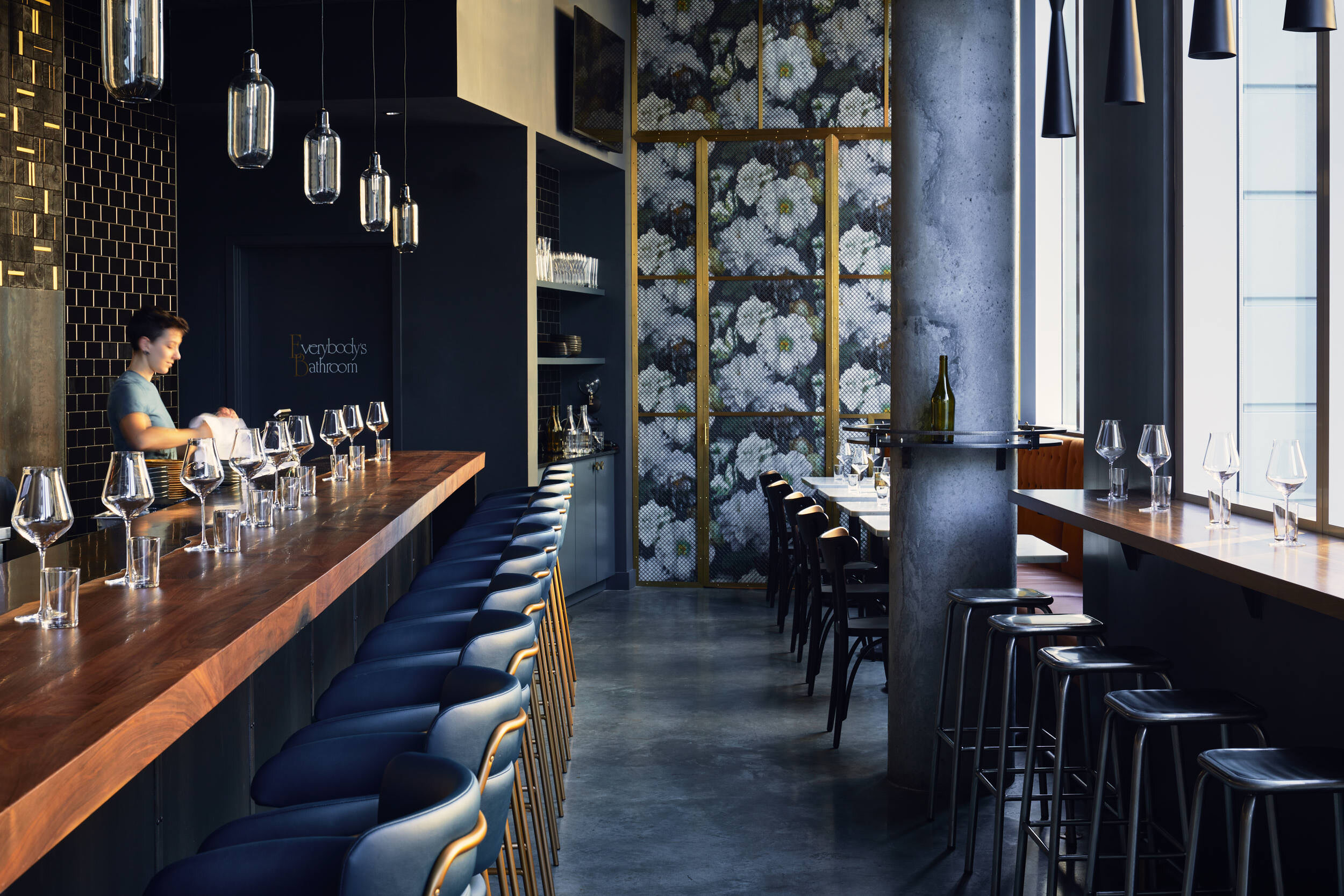
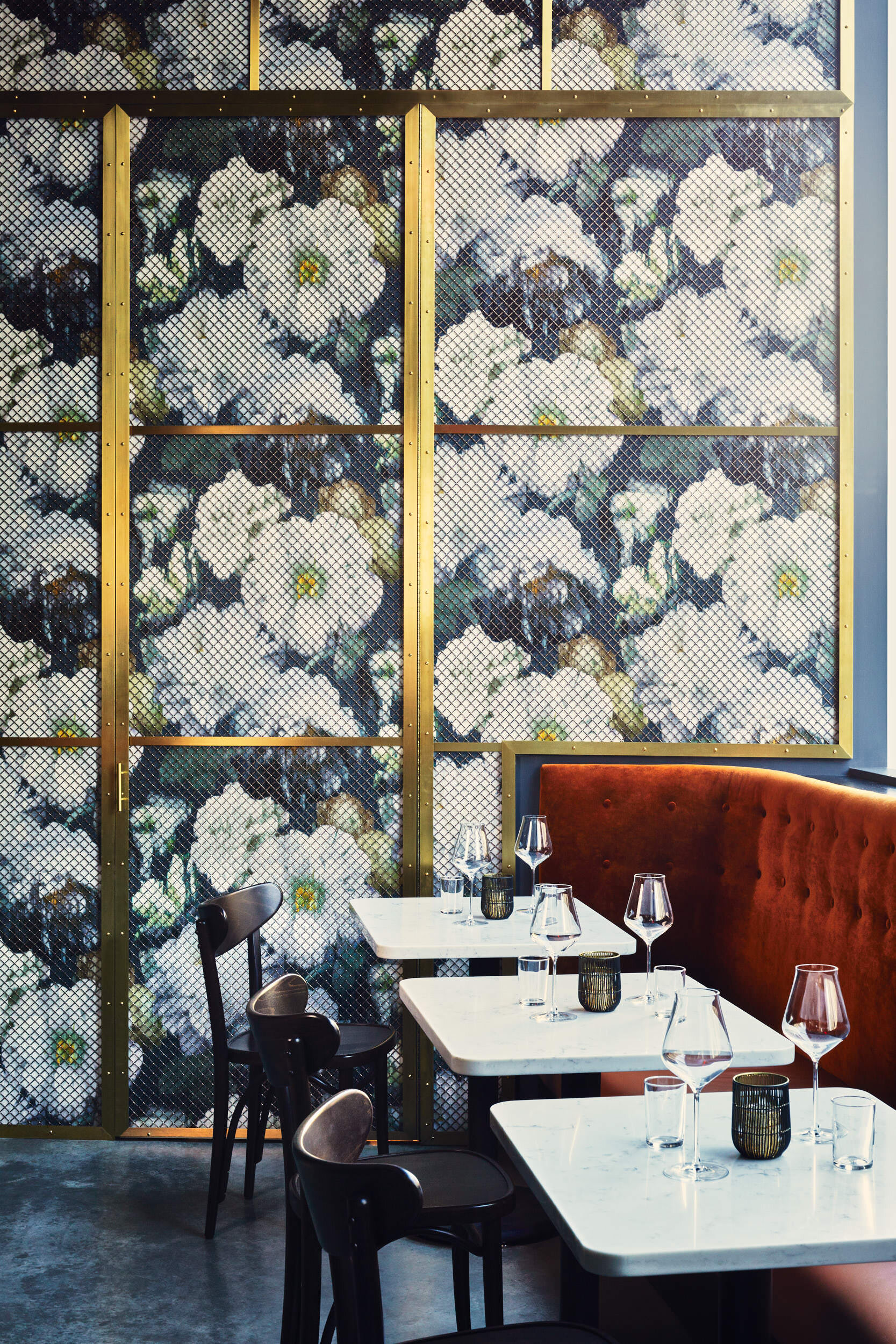
Nathálie Wine Bar, Fenway - Wolf In Sheep Design & Fennick McCredie Architecture
Two weeks ago, I received an email from an up-and-coming architect from New York. Like many who reach out to me for the first time, this person's email opened with compliments about my work and information about how they found me. Then they explained the project they needed to have photographed, not giving too much away, but leaving room for me to ask for more information. And, as all of these emails do, they humbly asked what my rates were and if I were interested.
So, I responded, thanking them for the compliments and offered compliments of my own about their work. I also graciously thanked them for reaching out during these times. Choosing to spend money on photography is somewhat of a luxury these days, so I don't take lightly their decision to shop for a photographer. I then tried to gather a little more info before dropping a price. I also asked if other parties would be interested in buying-in on the shoot (it's common practice, saves my clients some money, and it’s a great way to increase revenue). Given that we're essentially in a buyers market right now, I chose to dance delicately through this negotiation to offer this potential client top-tier images without too great a cost.
When I heard back, I learned that only a few interior images were necessary, maybe 4-5 photos, tops. There wouldn't be any other parties that would be buying-in on the shoot. Contractors, interior designers, or vendors were not going to be involved with this shoot. The architect did mention that they weren't able to afford too much. They're a small firm, and judging by the photography on their site, they've been photographing projects themselves until this point or have had a friend with a camera photograph for them.



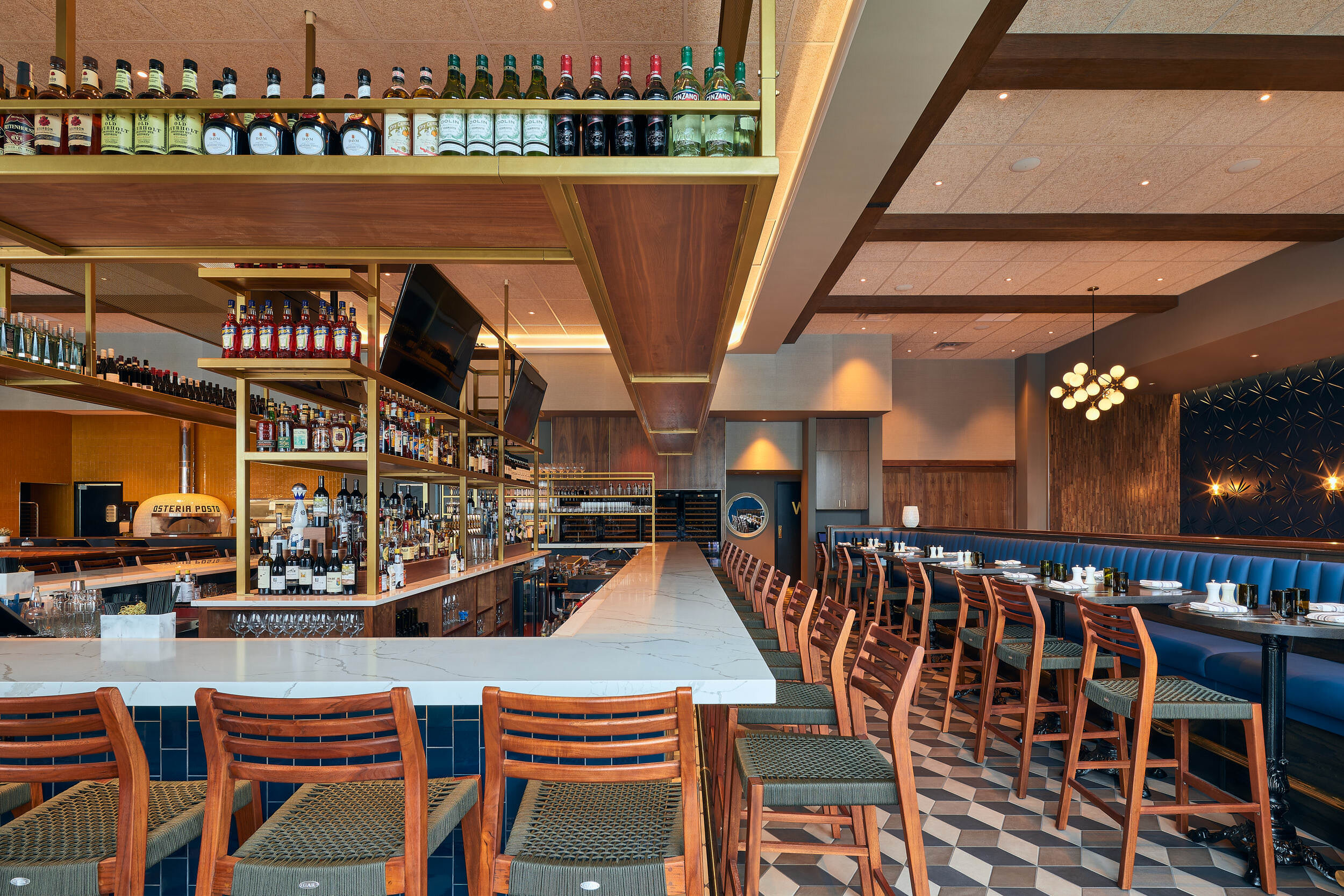
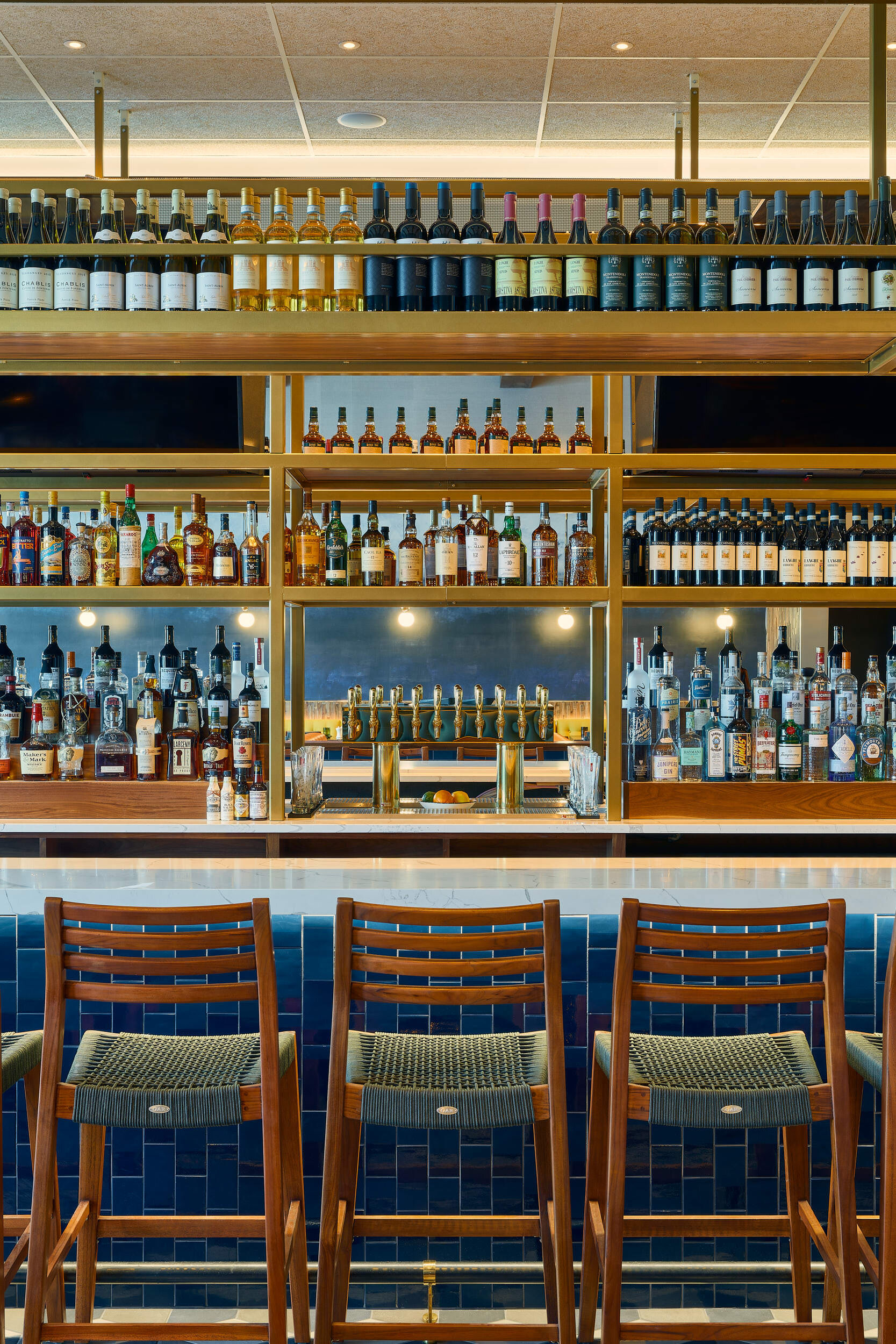
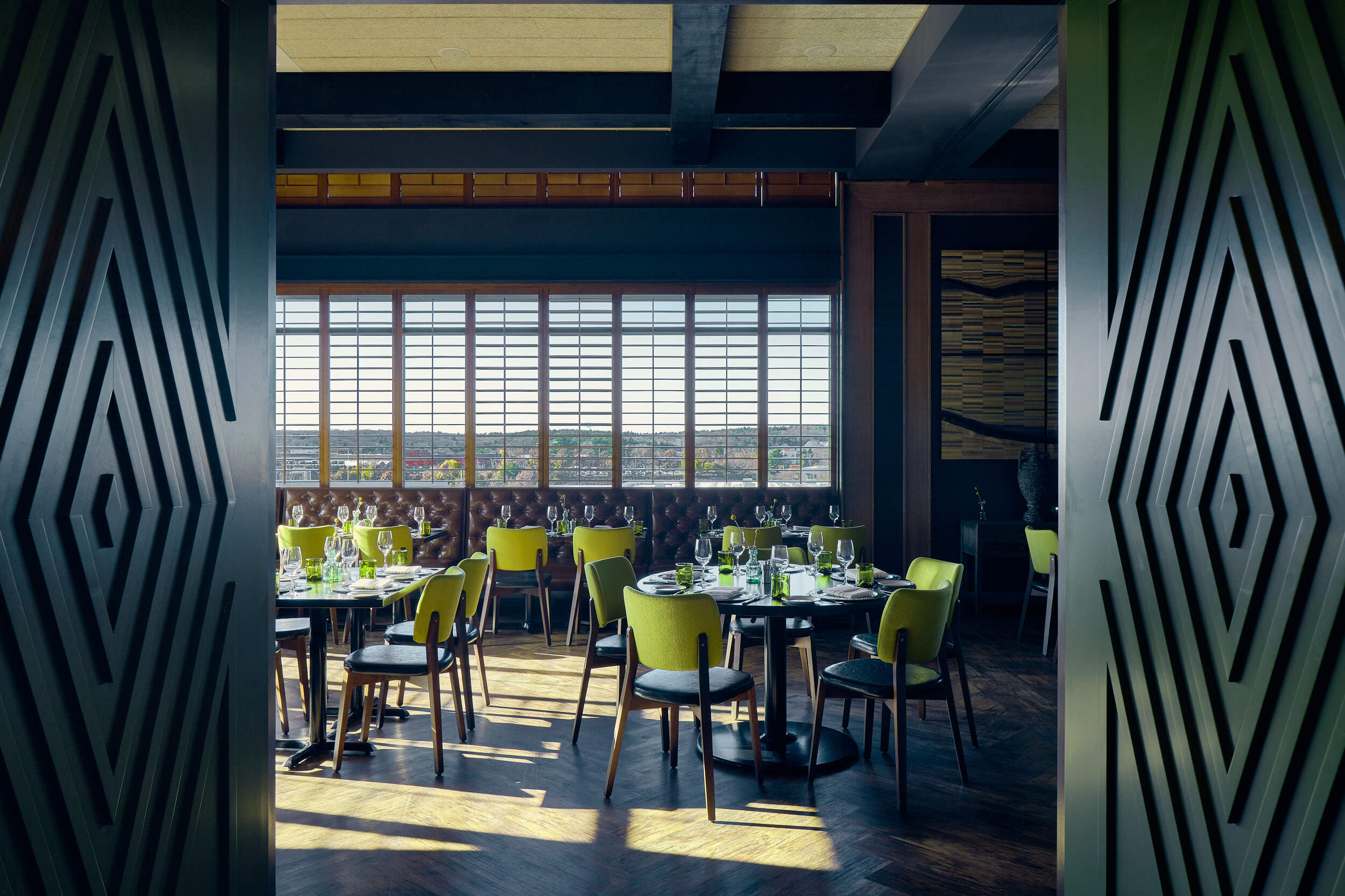
Understanding this project, I could photograph without an assistant and take only the more significant part of an afternoon right up until sunset to complete the shoot. I was able to conceive a price that seemed comfortable for both of us. I also reserved in my mind the potential to resell the images to those other parties later on, if they become interested. After a quick back and forth, the price was agreed upon - at this point, only through email.
Now during all of this, I explained how my licensing worked. I outlined how I choose to retain ownership, copyright of the images as the creator, and license photos for commercial use. My commercial license would allow the small firm to advertise regionally, use the photos on any website owned by them, publish the photos on their own social media profiles, print them on promotional materials, display them digitally in presentations, archive them, and submit them to competitions. My only request was that if another party was to benefit from using the images, they be referred to me to purchase a one-time license (like a blog, magazine, or newspaper). I have always held firm, that yes, editorial publications use social media as advertising. And that all magazines have a budget for photography. When a blogger or magazine publicizes an article written about my clients and posts my images on their sites and to their profiles, they produce content that is then analyzed for engagement, which drives advertising dollars. Once images are widely shared, a vast audience also wrongfully assumes that the photos are up for grabs. As a business owner, I have to protect my assets and revenue streams.
My last point was that if you're spending money on photography, why would you let someone else get the images for free? What if you spent thousands of dollars on a shoot, and found out I just gave the photos to the contractors and vendors for free?
And, here's when things changed.
For the second time in about six months, I've had to explain to new clients why they can't just "have the images" and "use them however they want."
This architect told me that photographers in LA (and let's be honest, it's not just in LA) were happy with just billing a fee for the shoot and just giving the images to their clients to use however they want. Theirs to own, they said.
Wow.

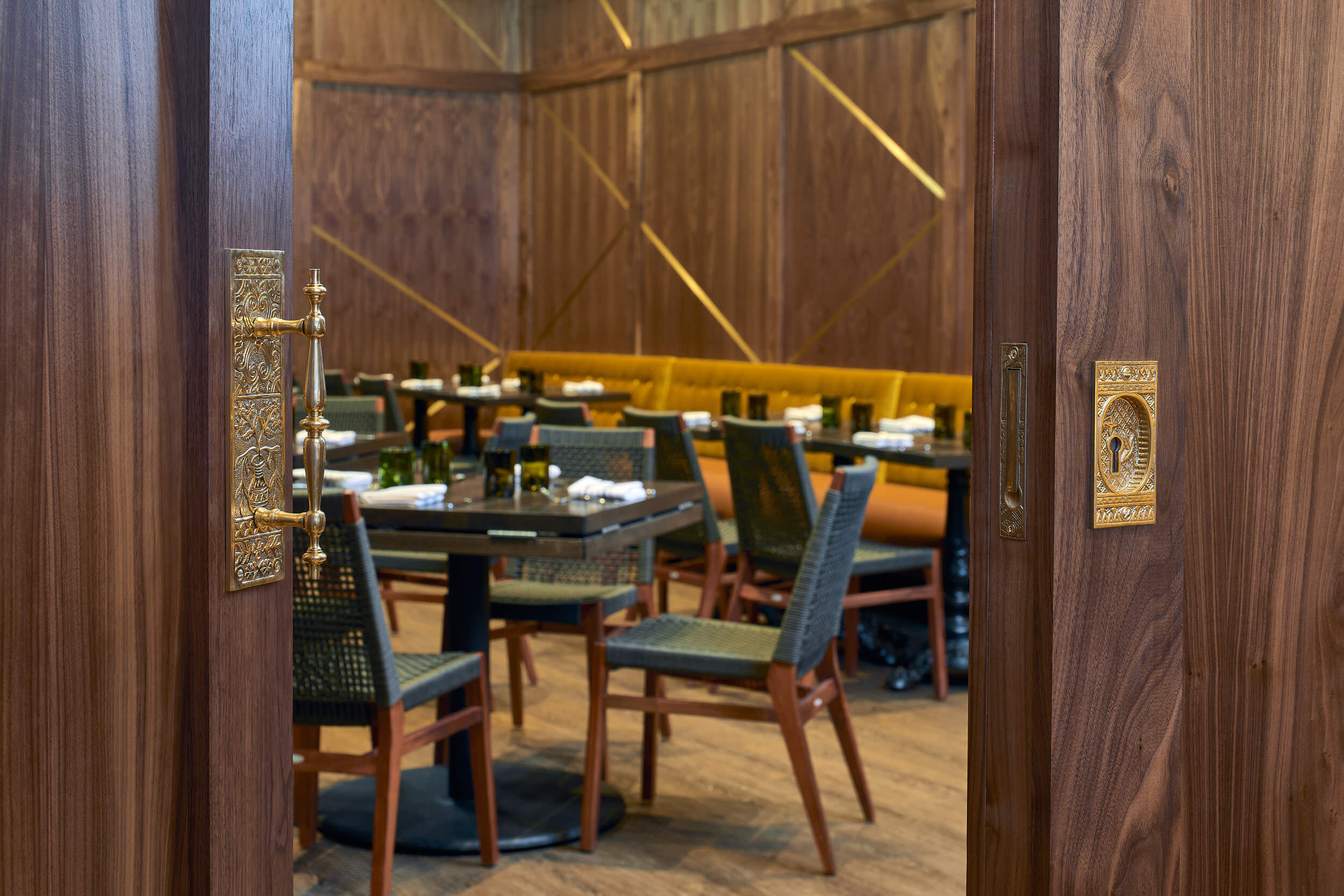
Nathálie Wine Bar, Fenway - Wolf In Sheep Design & Fennick McCredie Architecture
First off, whoever is doing this, you're operating an unsustainable business model! If you're new to this business, there's a learning curve, and I'm sure you'll soon course correct and find there is a way to make money as a photographer. But, if you've been at this for a while and this is your modus operandi, I hate to say it, but you are the reason why you're working so hard and not making any money. And, you're devaluing the work of your peers.
After pleading my case and reasonably explaining why I couldn't just let them send the images to the well-known, internationally recognized publications in exchange for photo credit, we amicably decided to go our separate ways. The architect told me that they were better off just trying to find someone who would let them own the images.
If this is a growing trend, this industry will fail. Conversely, if clients are happy paying more, then I’m sure I can find a way to be happy letting them use the images however they want. But, if fees keep falling, then there’s nothing to save this ship from drowning. With the closing of so many professional photography schools, it seems only university photography programs that specialize in fine art are the only places left to educate our photographers of tomorrow. While I, too, started by offering shoots for a meager price, I never did any work for free or let the photos be shared in exchange for photo credit. My tax guy can't send the IRS clippings from the newspaper showing my business generosity for donation expenses on my Schedule C. Trader Joe's doesn't accept widely shared images on social media in exchange for groceries.
Suppose we're giving up on intellectual property rights. In that case, being an independent, freelance photographer will not be a profession in the future. If we're not taking this business seriously now, then when will we?
Sorry for the rant. If I reencounter this over the next six months, I dare say that the writing is on the wall.
- Joe
Past Articles about copyright, licensing, and pricing:

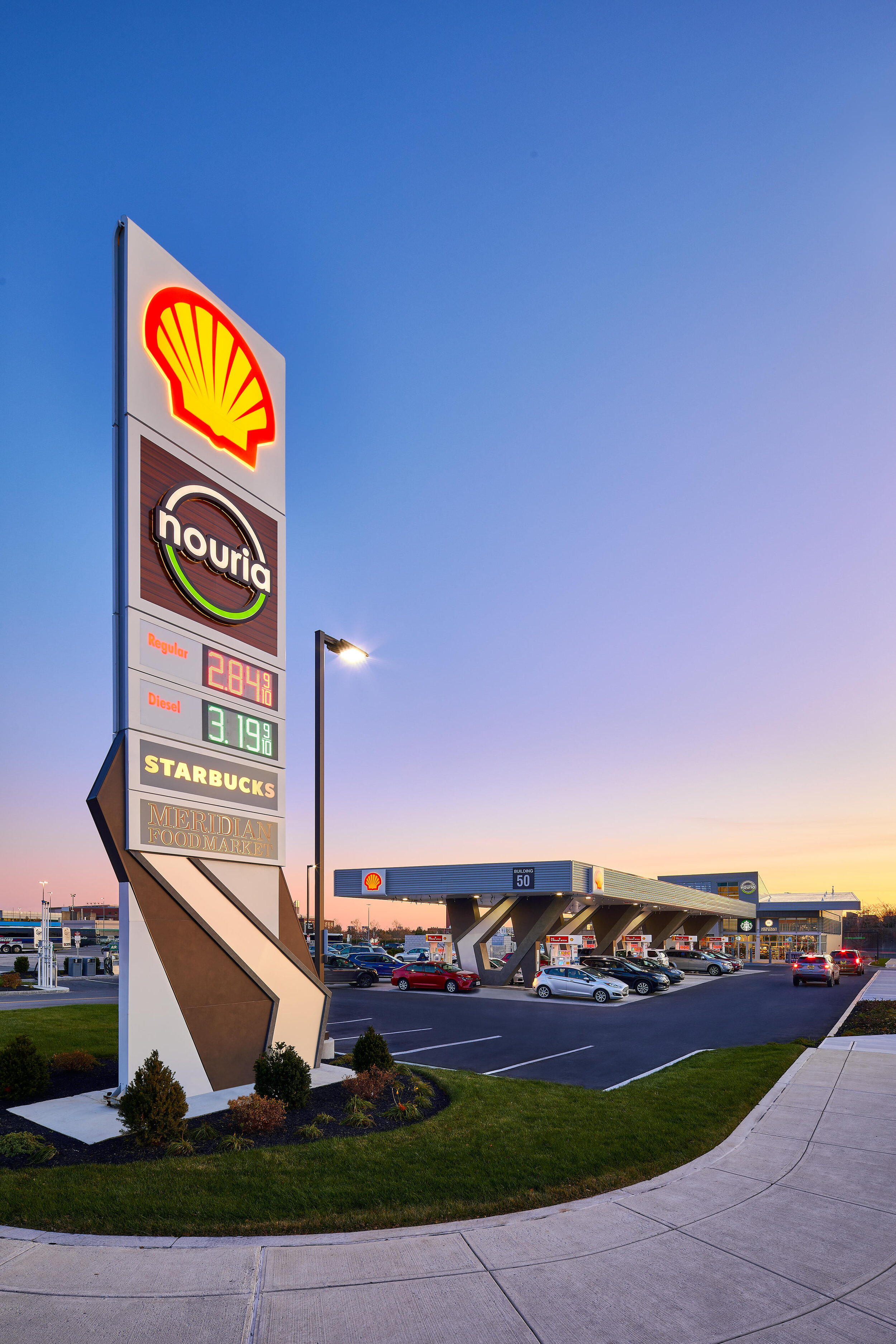
Sunup to Sundown: Nouria Energy at Logan Airport
I would like to take you behind the scenes of an exciting shoot from late last year. I'll go over my approach from planning the shoot, the technique behind making the images, and through the final stage of image delivery.
Over the past few weeks, I've written a few articles explaining the philosophy behind my business practices, copyright, and licensing. If you haven't read them and are interested in the business of photography, please check out those articles, here. I'll be cover more business-related topics in the future.
This week, I would like to take you behind the scenes of an exciting shoot from late last year. I'll go over my approach from planning the shoot, the technique behind making the images, and through the final stage of image delivery. Articles such as these may invite technical questions, and I hope you'll feel free to reach out with those in the comments below or by reaching me directly through email.
Let's get started.

For Phase Zero Design © Joseph Ferraro
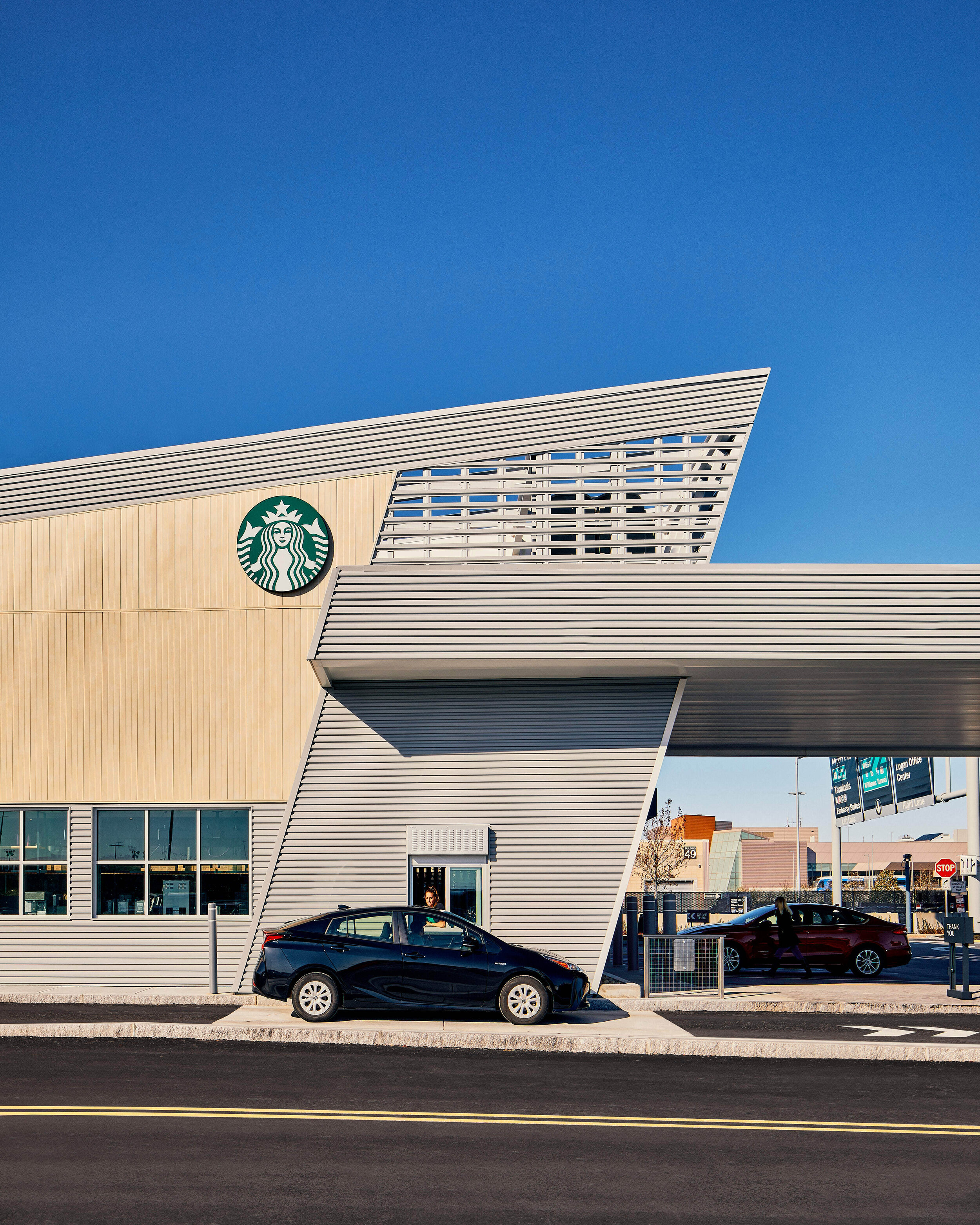
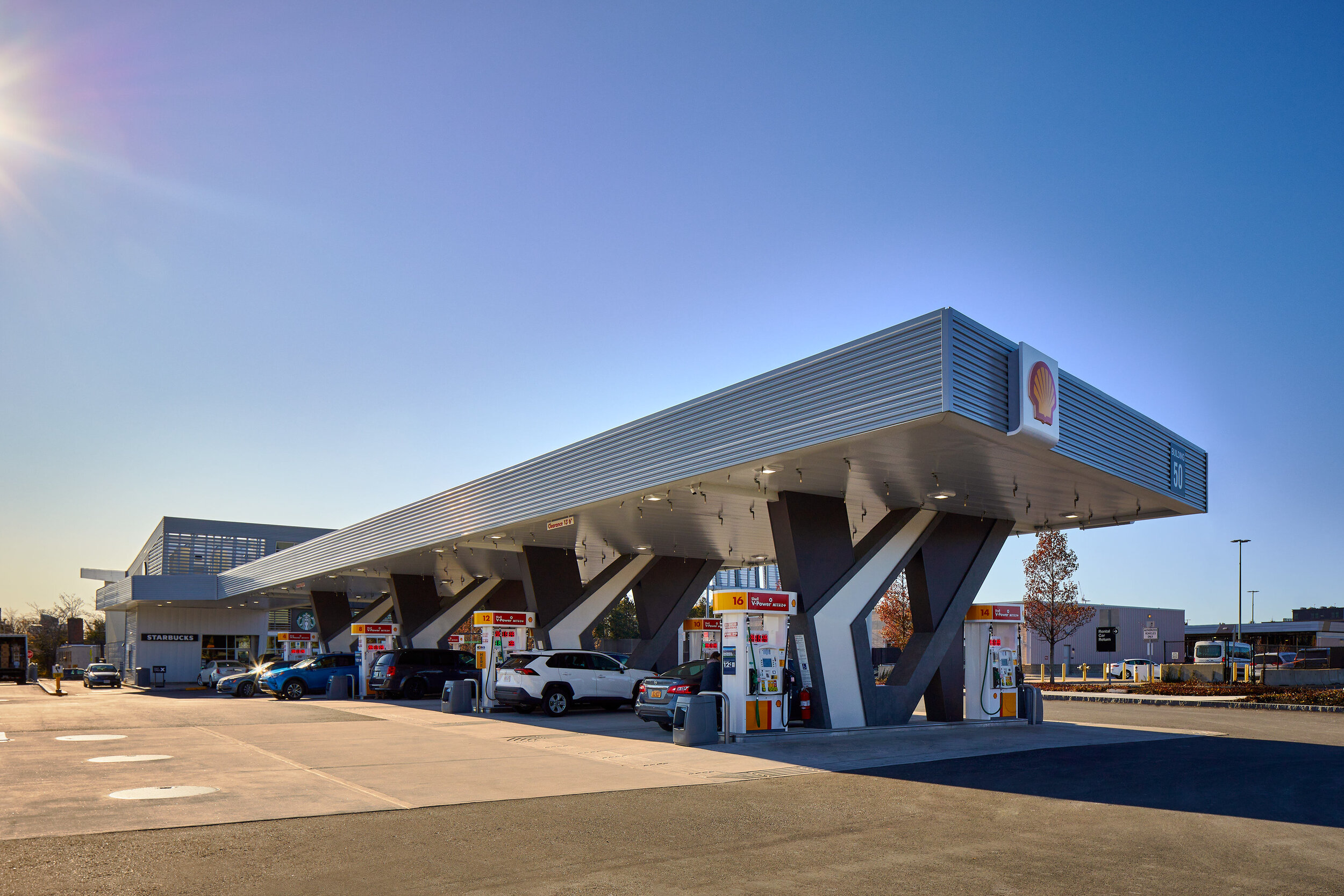
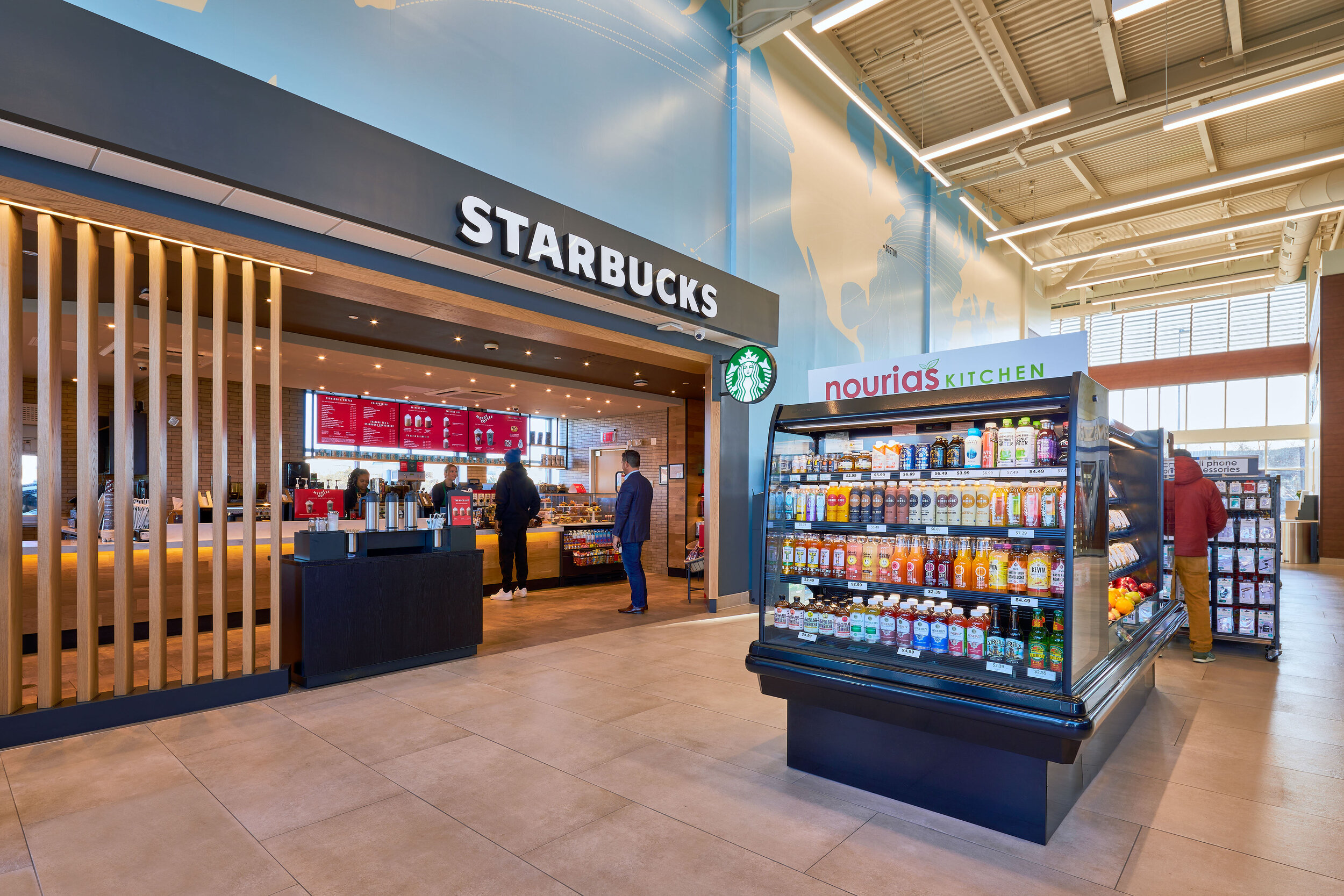
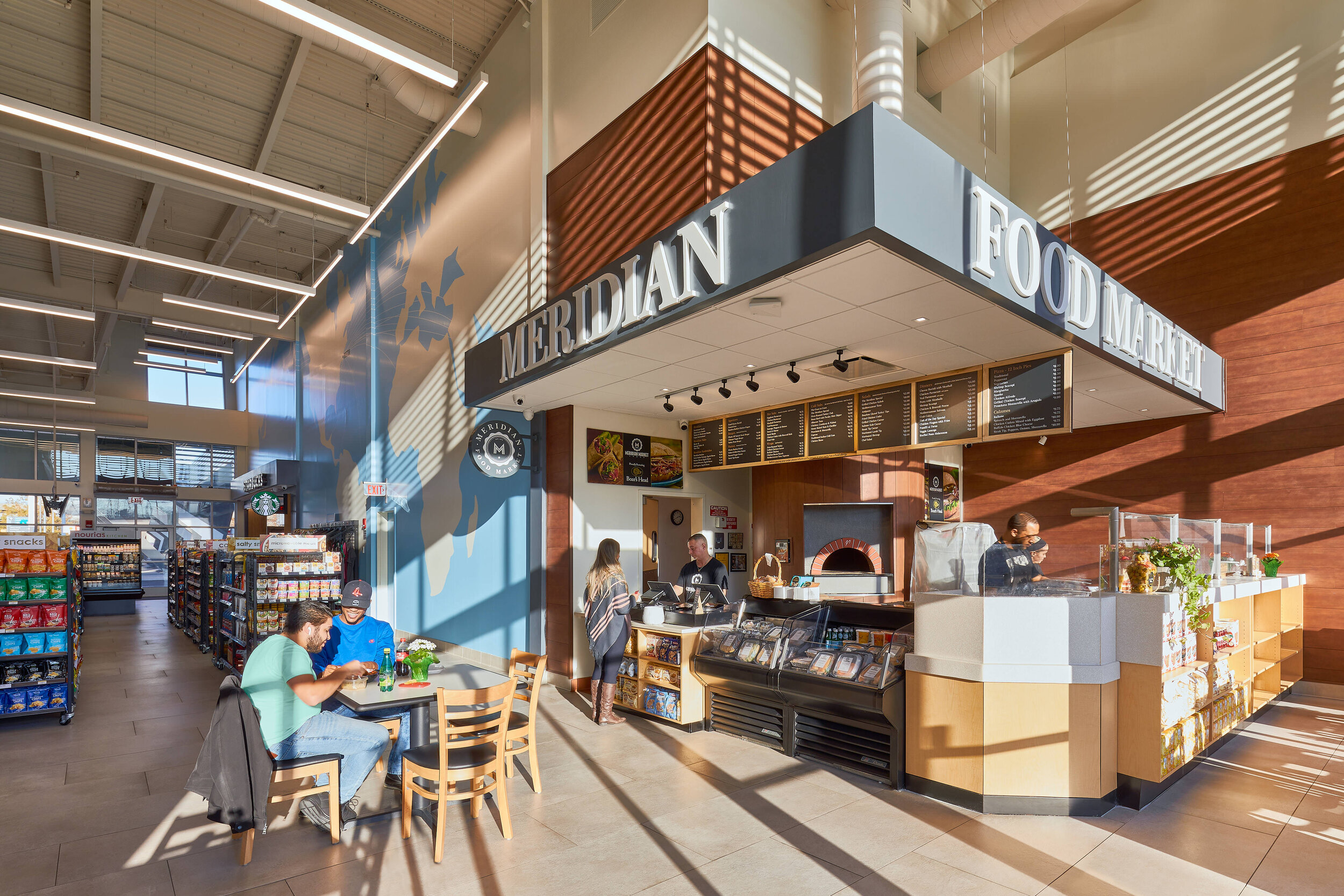
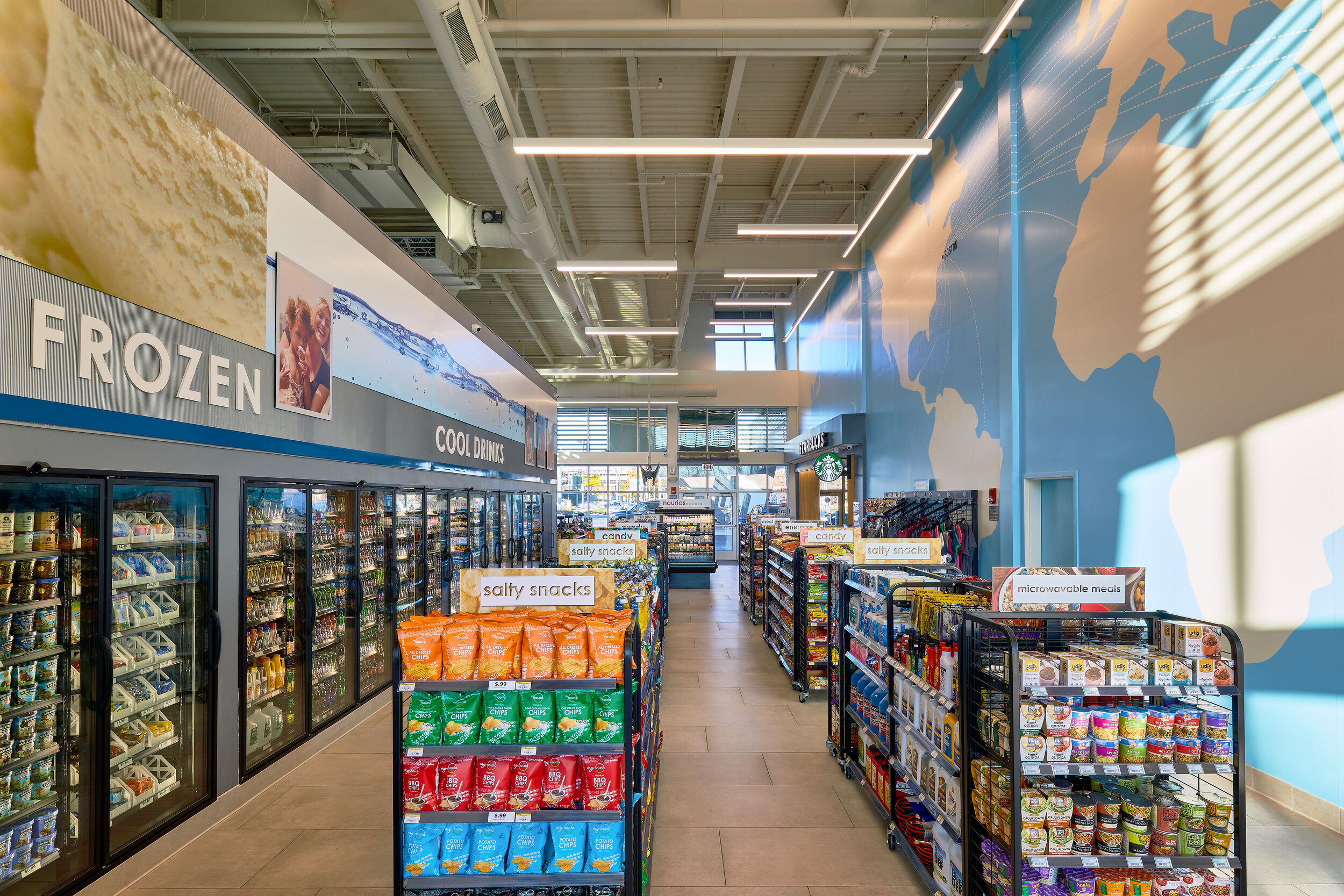
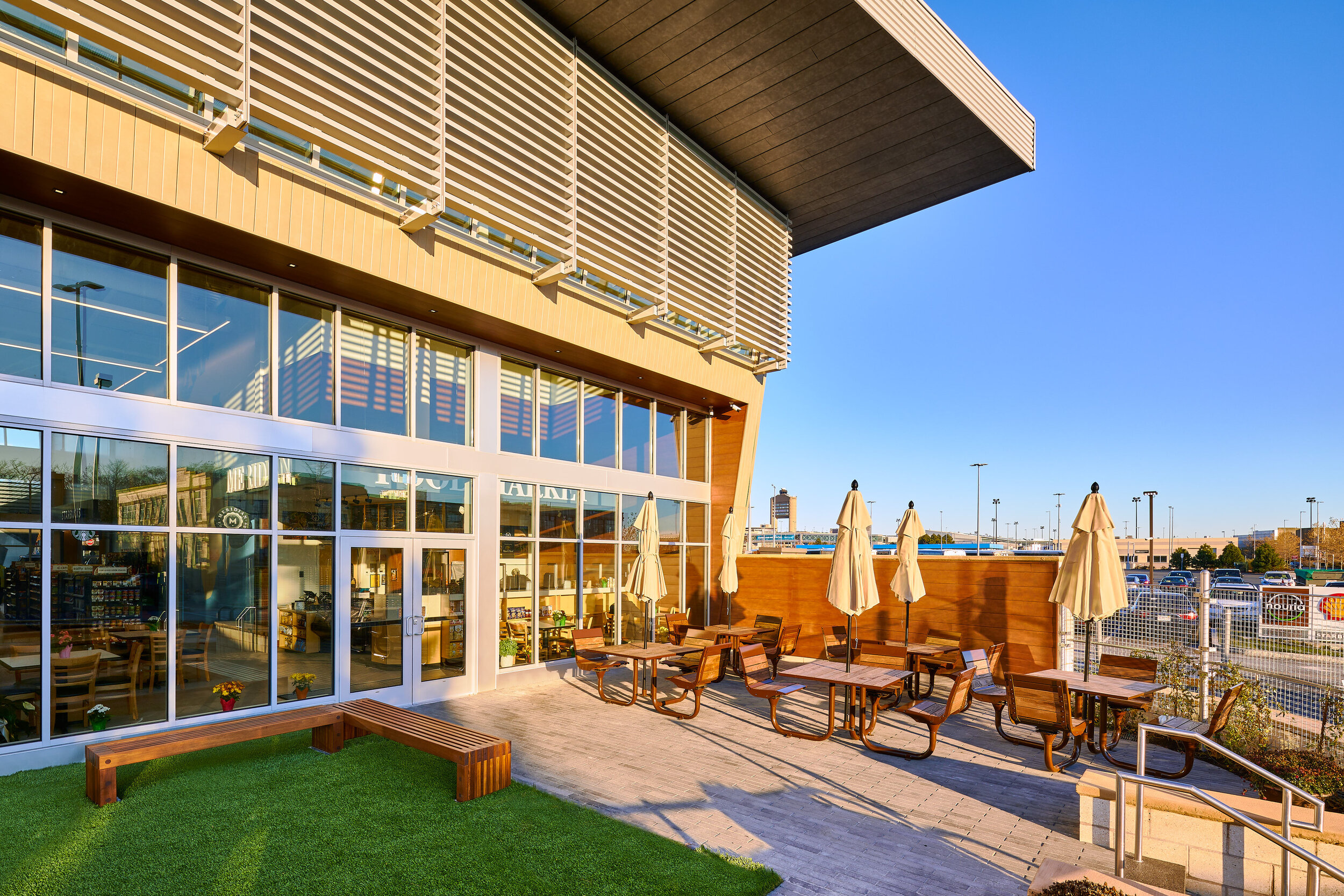
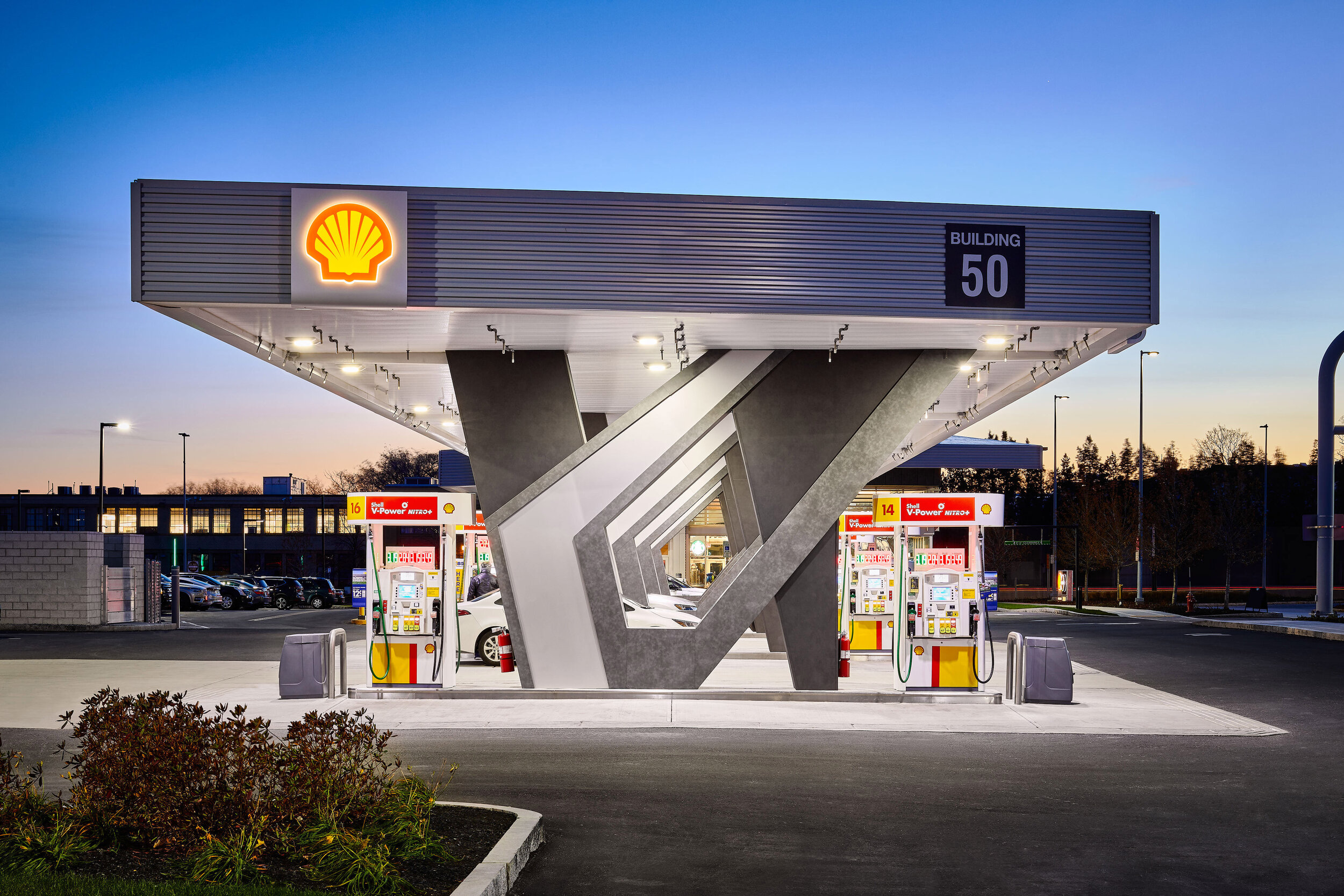
Nouria Energy Convenience Center: Logan Airport
Commissioning Client: Phase Zero Design (Architect)
Shoot Date: November 13, 2019
Site: 6,600 sq. ft.
Development Costs: $4.75M
Additional licensees: Nouria Energy (Site Owner), Entegra Development and Investment (LEED Consultant), Pure + Freeform (Materials - Metal Walls and Ceilings), The Ludlow Group (Marketing Firm), & AGC Chemicals/Lumiflon® (Materials - Paints and Coatings)
Photo Assistant: Tony Degrazia
Click here for the extended Gallery.
Proposal and Planning
I've been photographing projects for Phase Zero Design since my first year as a freelance photographer in 2014. I began working with them even before I knew I was going to dig my heels into architectural photography as a specialty. Their faith in my work has given me the confidence to grow as an architectural photographer.
As one of their projects moves into the final finishings phase, their marketing department reaches out with a Request for Proposals or RFP. After receiving an RFP, there are four main things I ask for to help estimate the costs for photographing their project accurately.
Nouria Energy © Joseph Ferraro
Final Number of Deliverables. Approximately how many images are Phase Zero Design interested in licensing from this project? Going into a shoot without knowing how much work is involved is a recipe for failure. The final number of deliverables does not indicate how many images are created on-site, but it sets a goal and identifies expectations.
Get out your calendar. When is this shoot likely to happen? I like to establish a project start date. While this is not likely going to affect my fee, it is crucial in creating an estimate that serves as a contract. I honor my agreements with my clients in good faith even if the shoot gets postponed. But, establishing a schedule creates momentum for the project.
Map it Out. I ask the client to provide site plans and any snapshots they've taken around the site? This aids in visualizing the scope of the project. I also ask my clients to mark-up any particular angles they're interested in, and I use that as a guide for capturing angles they prefer while also finding compositions that are interesting to me.
Single or Multi-Party Use. Are there other parties interested in licensing the photographs from this shoot? Who could benefit from buying in now instead of licensing images later? A multi-party buy-in allows all commissioning parties to split the total cost of the shoot (making the initial cost to my client much less than they would've spent on their own). Generally, most multi-party shoots increase by 25% of my Creative Fee for each party involved.
Example: If my Creative Fees for a shoot would cost my client $4500 (before expenses), then adding another party, like the site owner or a general contractor, increases my fee by 25%, to $5625 - an increase of $1125. But, in the end, both my client and the other party may split the cost of the shoot.
Multi-party shoots also grant each party a license to the same number of photos specified in the estimate, but each party may choose their images. Commonly, I'll create more than a few alternative angles, beyond the initial shot list.
If my client is interested in buying a license for another party, what I call a "gift license," I typically only increase my fee by 20% (still covering my licensing costs, but giving my client a break for their generosity).
In this case, Phase Zero Design purchased a license to the final set of images for their client, Nouria Energy, as well. So, by including this in my estimate as a gift license, I've guaranteed commercial usage for Phase Zero and Nouria Energy.
Next, I ask my client to send back a signed estimate and often a 50% deposit. A signed estimate is essential to enter all parties into an agreement, protecting both my interest in the shoot and protecting my client by holding me accountable for delivering the content I've promised.
I then begin planning the shoot by investigating the site, assembling a crew, and preparing what gear to bring.
Planning
One of the advancements in technology that many modern photographers could hardly do without is a decent weather app and a calendar of sunrise and sunset times.
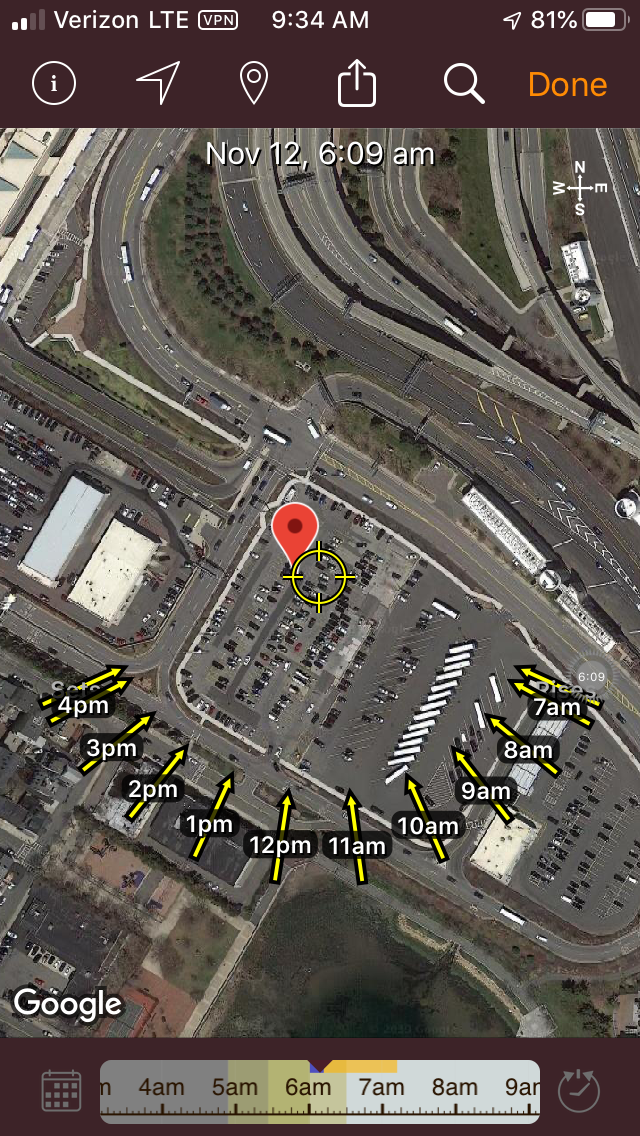
Sun Seeker’s timeline for the sun’s movement on 11/13/29.
I've used a few of each over the years, and I currently rely on DarkSky for my weather predictions and Sun Seeker for my sunrise/sunset timing.
My assistant and I were looking at a 6:15 am arrival time for sunrise. We knew we would likely stay through sunset, given the New England sky in November glows nicely up to 15 minutes after sunset. So, we were in for a long day.
For gear, I always bring:
Camera Body: Canon 5D Mark IV with remote and backup batteries
Lenses: Tilt-Shift Lenses: 17mm, 24mm, 50mm, & 90mm and a 24-70mm f2.8, plus 3-4 filters for various things
Laptop: 13" MacBook Pro with a USB tether cable to connect the camera to the computer, a charger, backup battery, and hood to cut down on screen glare.
Tripod: an 8ft carbon fiber Benro
Lights: Godox AD600Pro Monolights with Batteries and AC Adapters, Godox AD200 Pro II Strobes with extra batteries, and various gels for color correction
Accessories: air blower and lens cleaning wipes/cloths/spray, gaffers tape, light stands, boom arms, umbrellas, reflectors of various degrees, grids of multiple degrees, black cloths, white clothes, shoot through rolls of diffusion material, clamps of different sizes and purposes, sandbags, knife/leatherman, a bike tool with screwdrivers and allen wrenches, small ladder to reach my camera if we're 8 feet up on the tripod, rolling cart to move the gear and the computer around with us quickly, and coffee, water, coffee, water, mints, and more water.
Packing the Forester the night before and the morning of is a lifesize Tetris match.
On-Site
While my agreements state that a representative from my client's office must be on-site to facilitate access or approve shots, it's not always necessary. Once I've been working with a client for a while, it's easy to send low-res proofs by email throughout the day to keep them up-to-date on our progress. Building trust is a big part of forging long-lasting relationships with my clients. If my client cannot be on-site, I always request the contact information of the building management or someone at the site who can aid us should access issues arise or if we need to manipulate the lighting on the premises.
In this particular instance, there were to be many more exterior shots than interior shots, and the high temperature for the day was a frigid 19˚F, not including the wind chill at Logan Airport (which sits on a peninsula hanging out into the Boston Harbor). I'd never ask anyone to tag along in those conditions.
The first thing I do when I arrive on-site is to review my client's marked-up site plan and orient myself to the physical site and conditions around it. I like to identify any obstacles or elements that need to be moved for particular angles, or consider the background and adjacent sites and make a mental list of distracting elements.
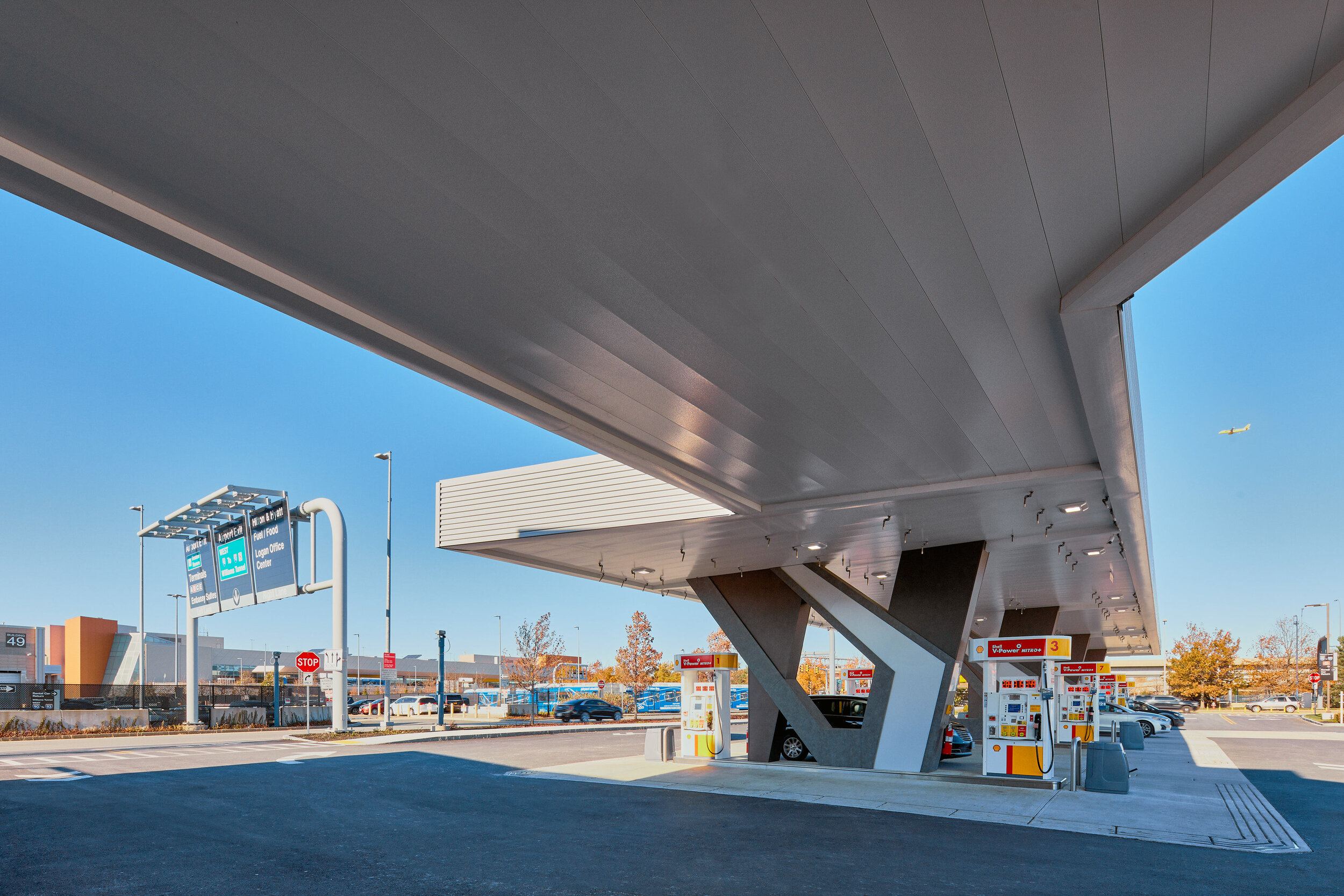
Nouria Energy exists on the site of an old parking lot, and the streets around it were in excellent condition. The only elements that caught my eye were the bus depot next door, the airport communications tower, and I noticed just how busy the now-active fueling station was to the public.
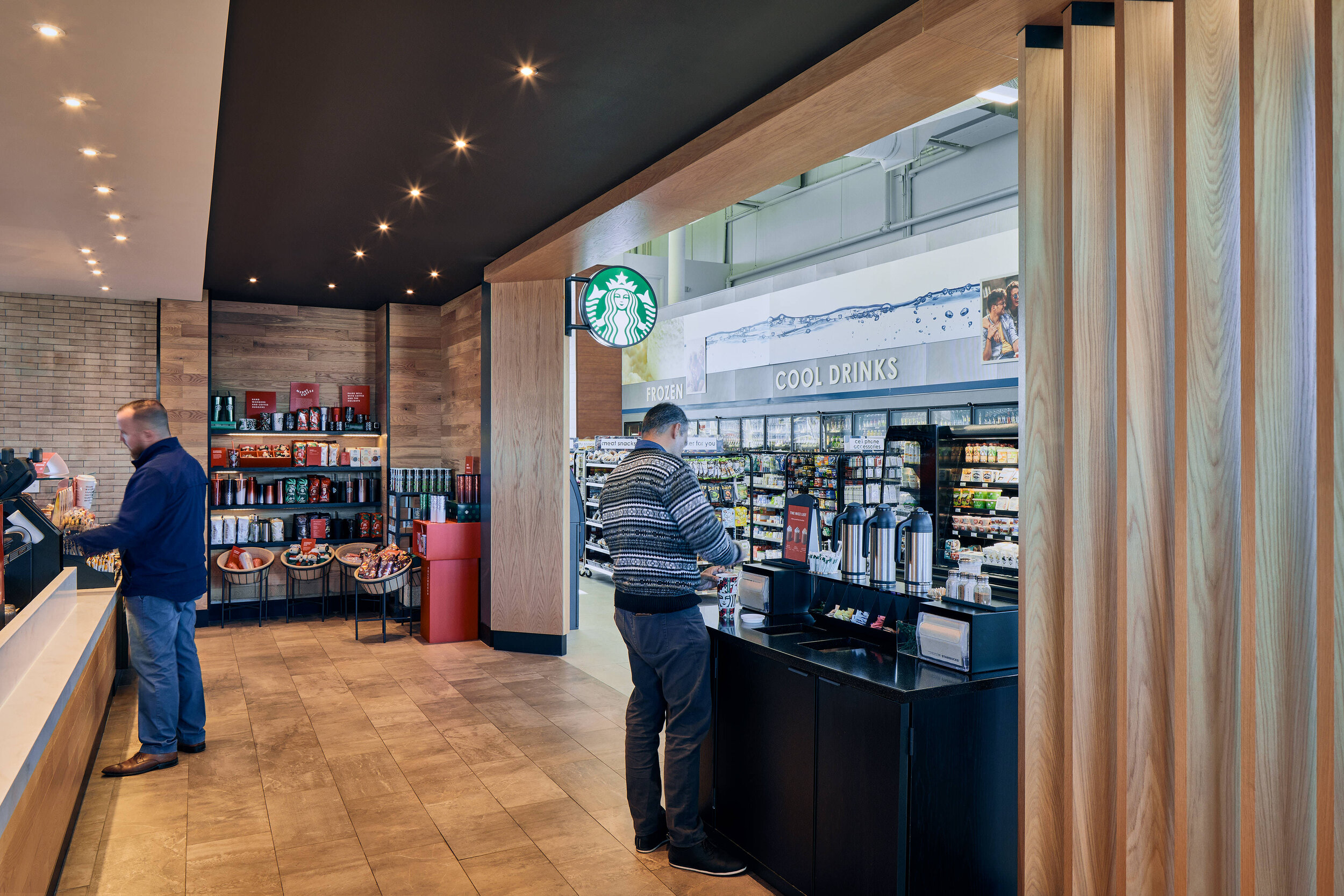
That's right, this site was fully operational, and we had to time our shots not only around the schedule of the sun but the rush of the coffee- and lunch-crowds. The convenience center at this site has a Starbucks with a drive-through and lobby, a full service and well-stocked convenience store, and a Meridian Food Market takeout restaurant, famous in East Boston for its hearth-fired Italian food.
Nouria Energy © Joseph Ferraro
Off to the Races
Being flexible during a shoot can ease the stresses of trying to force a shot to happen. I find that whenever our backs are figuratively against a wall, it's better to step aside and evaluate whether there may be another approach. This shoot was a good test in conducting a thorough walkthrough with my assistant, but being willing to shift our timeline for individual shots if things weren't going to plan.
Typically, I like to start with an establishing shot, especially if the light is beautiful at the site when we start. On this morning, the sky was clear, and we could already see that the runway at Logan was sending up flights at an excellent frequency. This would allow us to get a plane in the sky for a few shots.
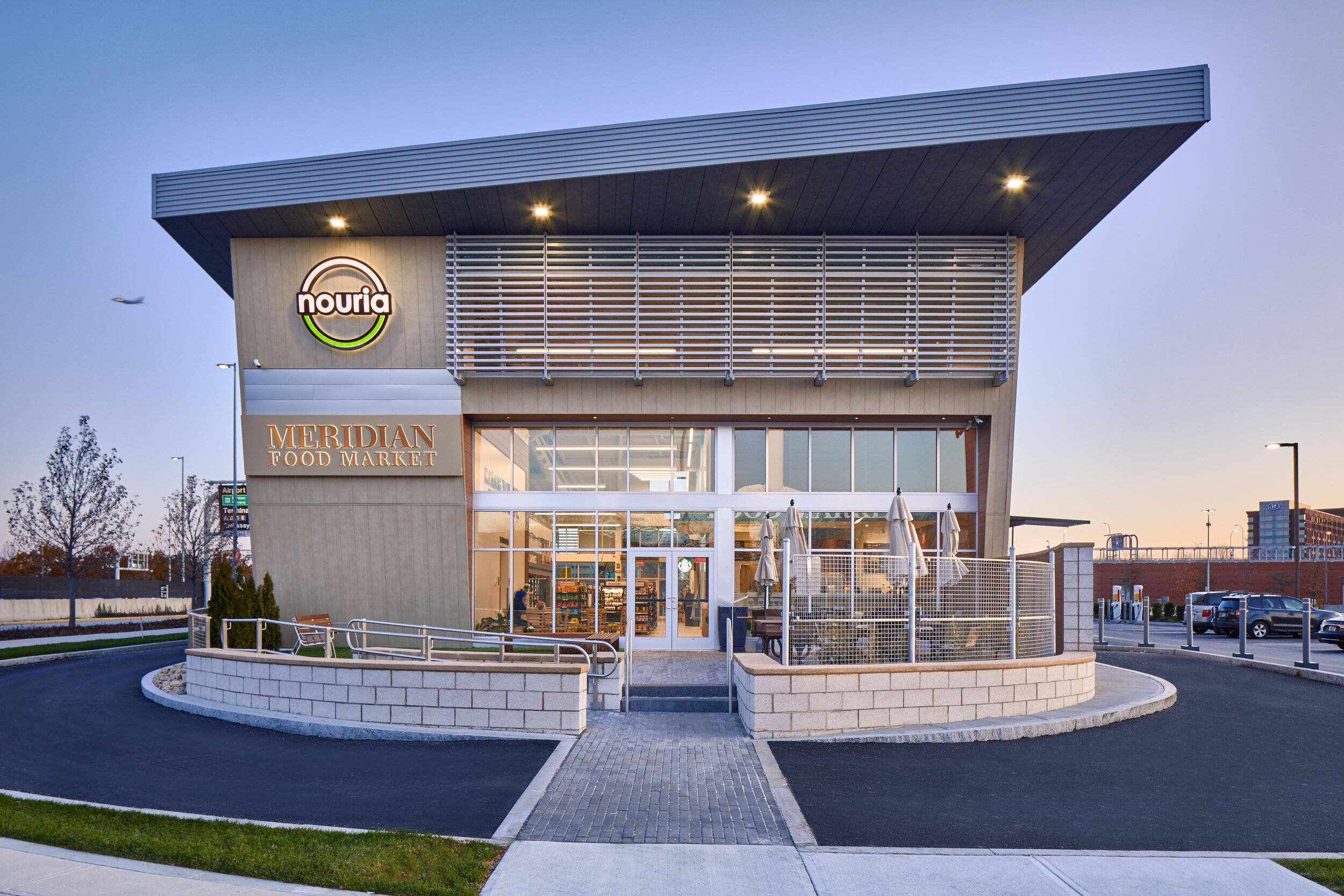
Nouria Energy © Joseph Ferraro
As the day went on, this shoot became set to the tempo of the public. I don't like prohibiting people's movements, and I'd rather just wait for them to move at their own pace and time my shots the way. But, when we do need to intervene, my assistant or I will approach someone and gently call their attention to the camera and explain what we're doing. Nine times out of ten, the person is kind enough to move for us or even be positioned by us into the shot where we could use a person to be waiting in line for coffee or walking through a doorway.
The process of photographing each composition can either feel like a rush against time or like a waiting game. I haven't determined which pace I prefer, but having enough time to compose and get everything set on location is much more efficient than spending time editing at the computer later. During this shoot, there was some waiting around for people to walk into a shot to give the project scale and purpose, and waiting for cars to fill up their tanks and leave for specific compositions to work.
Cutting Room Floor
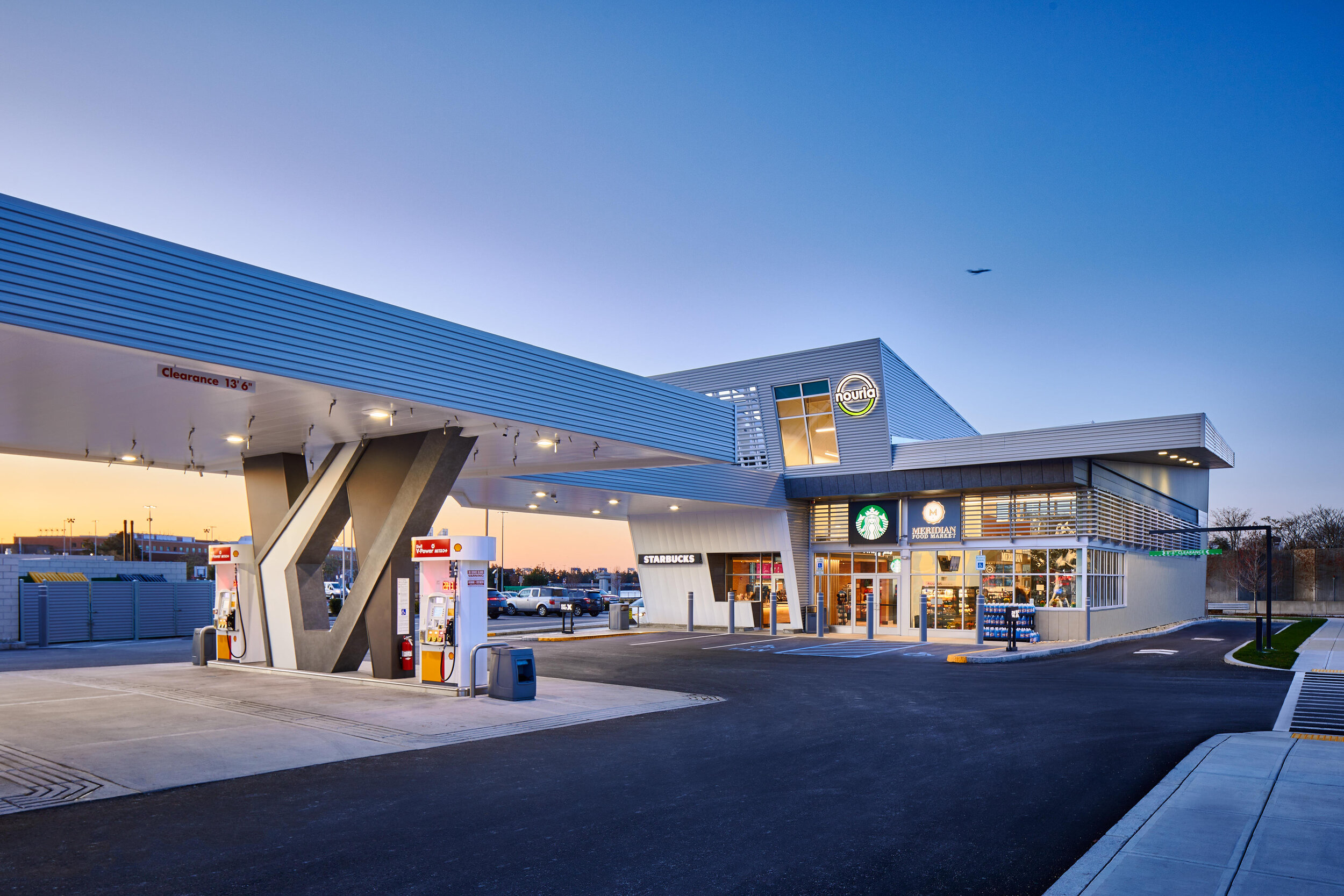
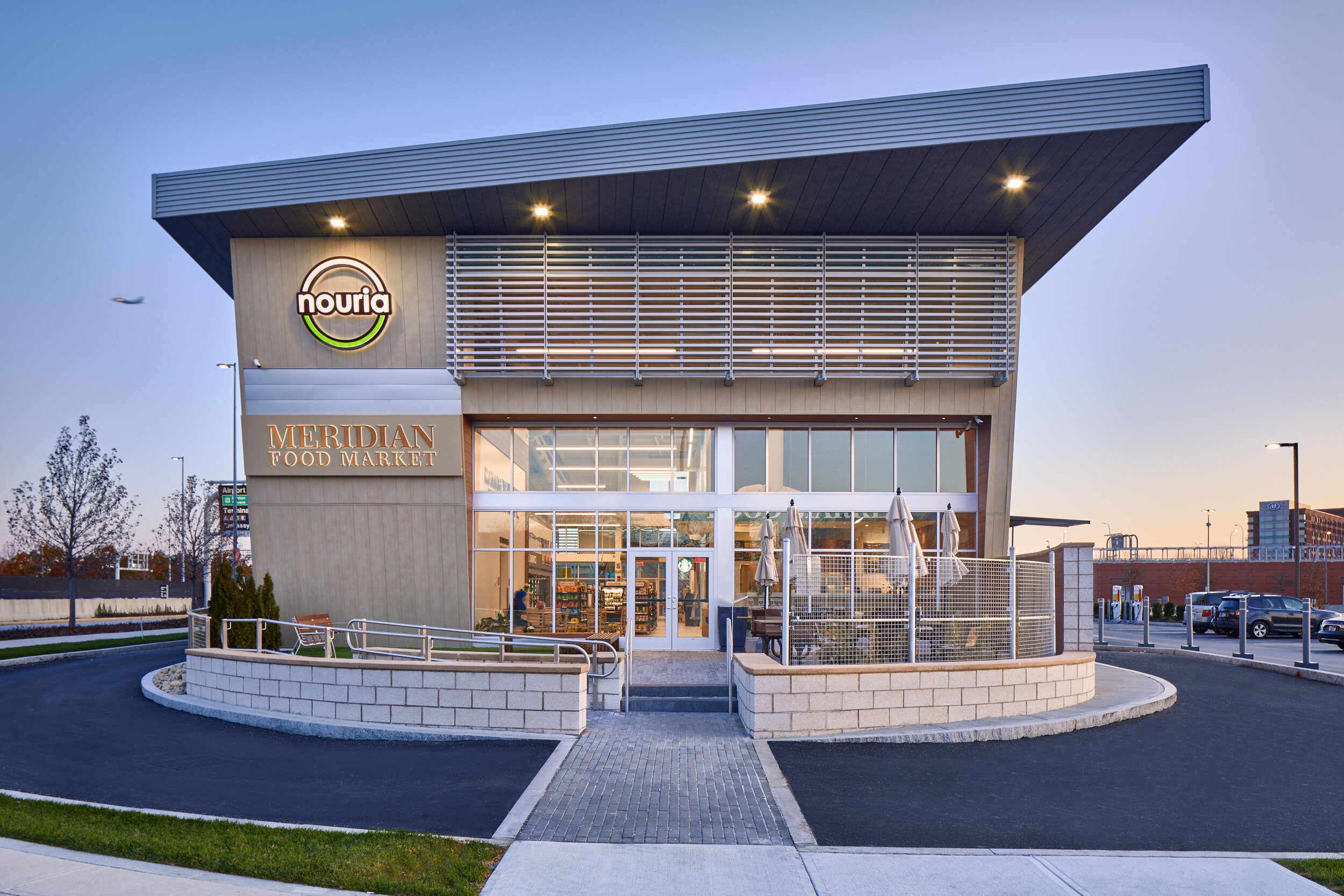
Just like the movies, some shots don't make it to the final edit. Sometimes a shot may feel like a good idea at the moment, but once I'm back at my desk, it can be easy to identify what works and what doesn't. On average, one or two shots aren't worth sharing with the outside world. But, once my final selections are determined, I assemble a simple proof gallery for my clients to view what we created. Out of the pool of images I share with them, they'll reply with their choices, and the final edit begins.
From returning from the shoot to getting my client's proofs prepared can take two to three business days, depending on how busy I am that week. But, I try not to keep my client waiting for more than a week for proofs. Then, once they reply with their choices, I'll take about 4-5 days in getting finals turned around to them - but again, no longer than a week.
Turnarounds are efficient because we take the time to photograph a composition with the goal in mind that I can get my proofs to their final state with minimal editing.
Billing
Once my client's final selections are edited and sent off, I file their final invoice with them, through Square, and offer them the choice to pay the remaining balance by check or with Square's online payment portal. In this business, being paid at a regular frequency can be hard to arrange. But, I try to make the sale as simple as possible to help that along.
But wait, there's more!
Other parties that weren't interested in buying in on the shoot before production started, now see the images and start reaching out. On this particular shoot, I heard from three additional interested parties and ended up selling them licenses to the complete shoot, after the fact. Some people call that gravy.
Its additional sales that make copyright protections and allowing the content creator the freedom to license their work essential to this business. If I gave my clients the images and let them share them with other companies to use, I'd have missed out on all of that additional revenue. So, to those just starting their businesses, if you have any questions about copyright and licensing, please reach out to a veteran in this business and get their honest take on it.
That's all for this one, I hope you've enjoyed the photography, and if you have any questions about what you see here or anything business-related, please don't hesitate to reach out.
Thanks for reading.
- Joe

Licensing & Copyright: Part One
By design, operating as a freelance photographer means running a small business. Though there are many places for photographers to learn their craft, there are far fewer places to learn the business side of their venture. Focusing solely on their craft, a photographer may miscalculate how valuable their images are and miss out on revenue; resulting in placing unnecessary strain on their businesses. Supporting the sharing of information can only improve photographer-client relationships and strengthen business strategies that sustain viable revenue streams and support all of us in the business of commercial photography.
By design, operating as a freelance photographer means running a small business. Though there are many places for photographers to learn their craft, there are far fewer places to learn the business side of their venture. Focusing solely on their art, a photographer may miscalculate how valuable their images are and lose out on revenue, resulting in placing unnecessary strain on their businesses. Supporting the sharing of information can only improve photographer-client relationships and strengthen business strategies that sustain viable revenue streams and support all of us in the business of commercial photography.
Originally posted as an article on BLDUP.com, 4/8/2020
Licensing 101
In my previous article, Best Practices: Exterior Photography, I mention that after the planning and the building of a project is complete, it's time to document the work of all involved. Creating marketable images to share with your current and prospective clients is the final part of the build process (besides those never-ending punch lists). Hiring the right photographer for the job will result in photographs that will aid in future proposals and generate sales.
It's those sales that photographers should be most interested in generating for their clients. If a company uses photographs to promote their services through marketing, whether they pay for advertising or post on social media for free, those photographs are generating potential income. Photographers can improve the viability of their business by licensing their work to clients for commercial, promotional use.
How it Works
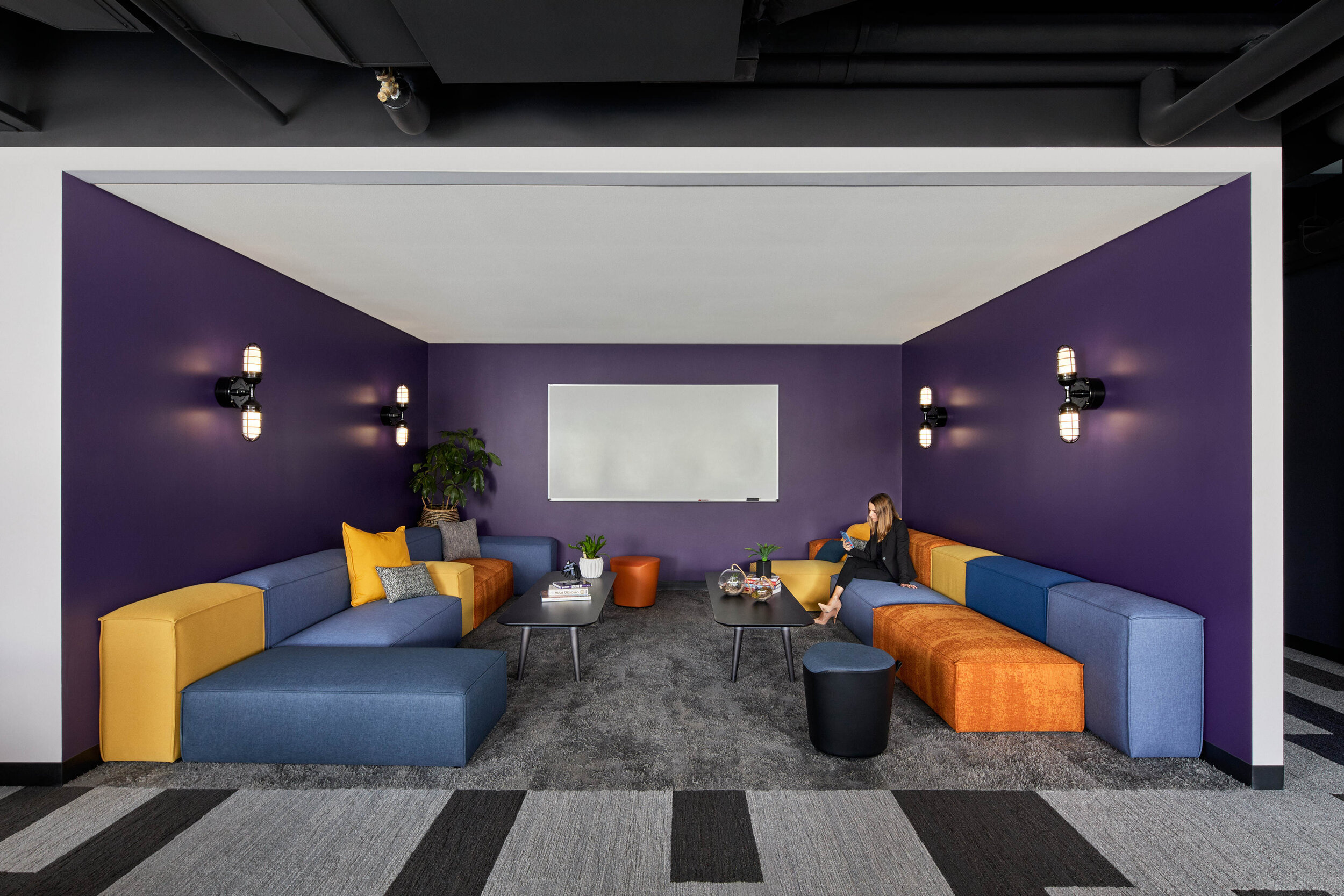
Distruptor Beam for Workflow Interiors © Joseph Ferraro
A photographer creates a work of intellectual property once they compose an image and press the shutter. Like other creative arts, copyright laws protect the work photographers create and therefore provides a means for a photographer to generate income from licensing usage rights for images to their clients.
Licensing is an agreement to issue a copy of the work generated by photographers in exchange for a royalty fee, granting the licensee the right to use the photography in ways defined by the photographer, for the length of time allowed by the agreement.
The Life of an Image
Current thought is that a photograph has a marketable lifespan of maybe a few years. It's been my experience that architectural firms can find a use for decade-old images if it helps illustrate a design concept to a potential client. So, in some licensing agreements, you may see licensing terms issued for as short as one year or as indefinite, perpetual use. Photographers who offer stricter terms may perceive a higher value for their work and expect a broader potential for future revenue by asking their clients to return year after year for a new license.
It has also become acceptable to issue a perpetual usage license that may price higher now but won't require the licensee to return to pay for more licensing when they need to use the image three or ten years from now. Either way, how a photographer licenses their work should be a reflection of their business strategy and their knowledge of their clients' market share and a project's potential to generate their client's revenue.
Commercial Use of Photography
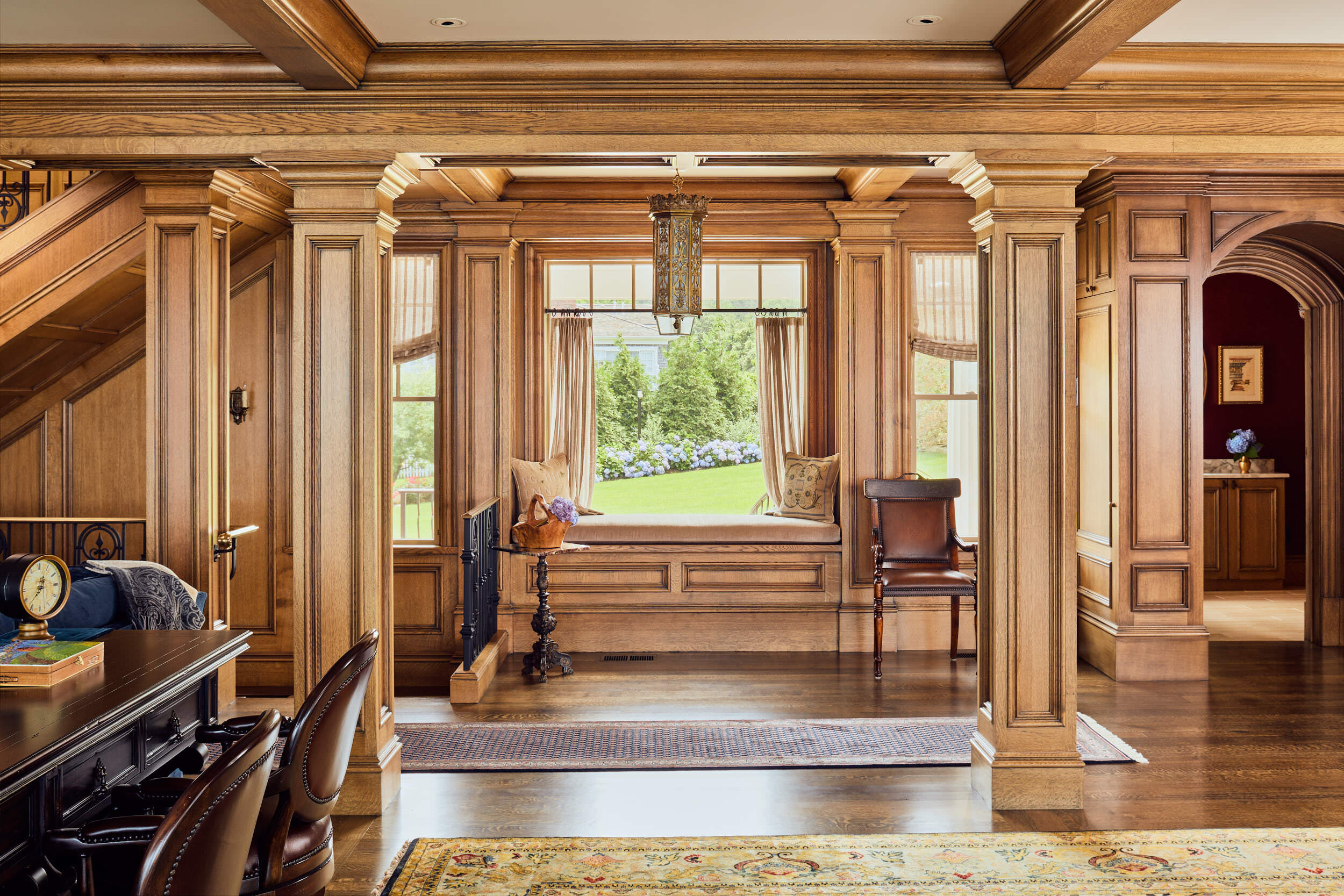
Applied Form & Space Architects © Joseph Ferraro
What a photographer perceives their work is worth is an age-old discussion that will vary by market, expertise, business structure, and most clearly confidence in their work. There are no clear standards in the way photographers price or grant terms for the use of their images. Some photographers combine licensing fees with their photography fees for each assignment, calling them "Creative Fees," so seeing a clear price per unit is not generally possible. And, other photographers bill their clients per image for usage rights.
What a photographer considers in pricing their work should include factors that separate them from the pack with value-added services. Such distinctions could consist of implementing more advanced camera technologies, showcasing more years of service as compared to their competitors, or by providing more efficient services than their competitors. Also, a photographer's locale and general knowledge of how their competitors price their work will indicate the market value of images. By maintaining a sustainable business model, a photographer can predictably work for the same clients year after year and create a protected habitat for their competitors.
A Dedicated Approach

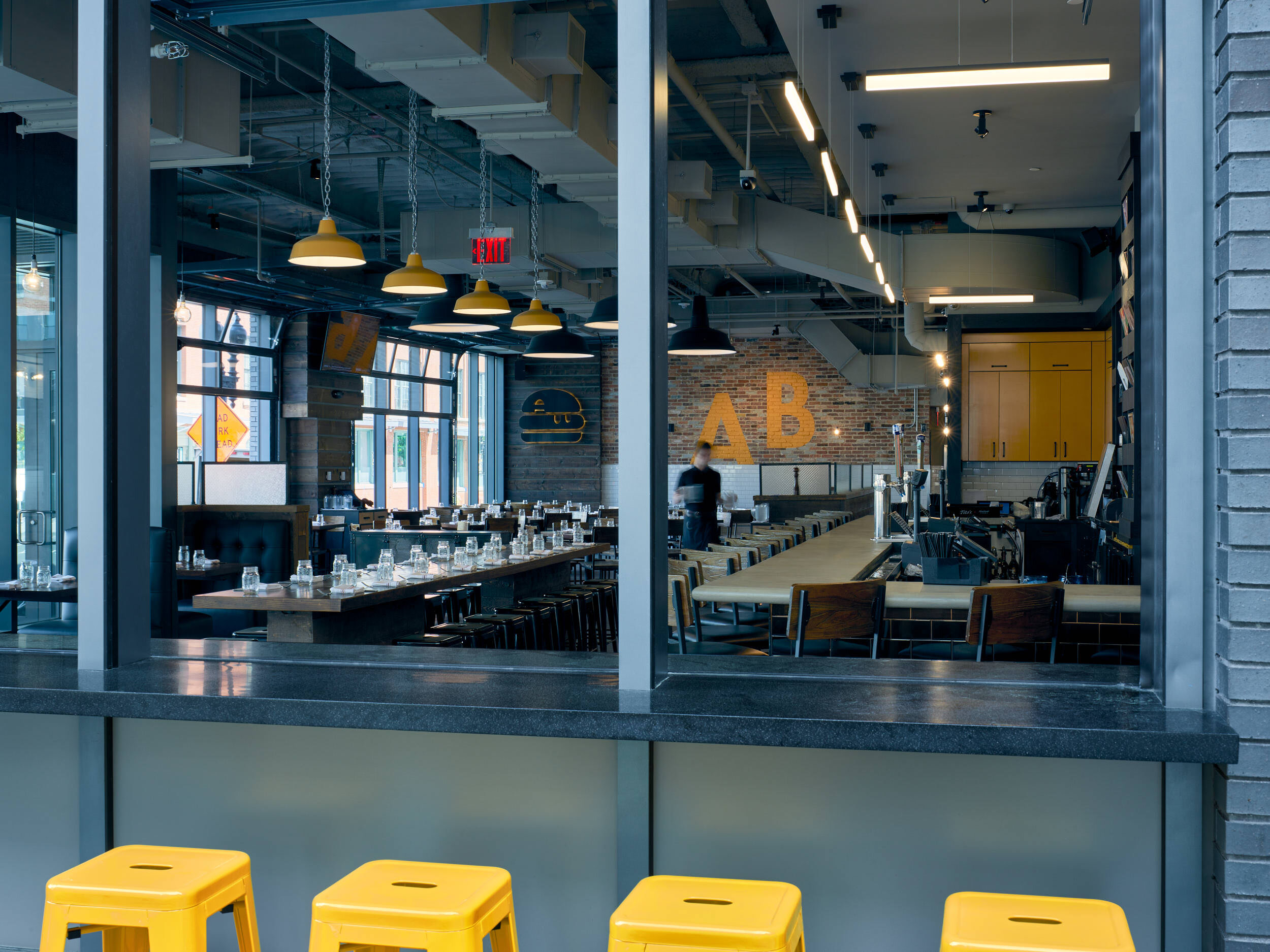
A&B Burgers, Causeway St. for Boston Urban Partners © Joseph Ferraro
As my business grows, I have more assignments that now include multiple parties buying-in on projects from the start. By combining my fees into a Creative Fee and granting generous licensing terms, I can more easily distribute costs between all parties buying-in on a shoot and make the administrative end of my business streamlined and more uncomplicated for everyone involved.
I've included a copy of my estimate paperwork, providing a look at my licensing terms for my clients in the Boston area. Please have a look through my paperwork, as I believe transparency only helps my industry and can make my processes clearer to my future clients. If you have any questions, please don't hesitate to reach out by emailing me at hello@josephferraro.com or calling 617-335-8925.
Stay tuned for Part Two of this topic, where I'll cover Copyright and how I enforce my licensing agreements with my clients and protect my business.
Attachment: Assignment Estimate

7 Steps of Inspiration
The beginning of 2020 started off with a bang. I spent the first half of January planning photoshoots and rolled into February with eight completed before Valentine's Day. And then… red light.

Blue Bottle, Newbury Street, Boston © Joseph Ferraro
The beginning of 2020 started with a bang. I spent the first half of January planning photoshoots and rolled into February with eight completed before Valentine’s Day. And then…
Red light.
Freelancers, independent contractors, and many small, small businesses know how important it is to prepare for an uncertain future. We all stress the importance of squirreling away a rainy-day fund and anticipating downtime between gigs.
Historically, downtime meant reaching out to clients, organizing my bookkeeping, archiving recent photoshoots, having coffee with colleagues, and researching architectural and product photography inspiration. Even amid the COVID-19 pandemic, many of us are still finding ways to virtually have coffee with each other. Nonetheless, I’m anticipating a slow down that could have lasting effects through the second half of 2020.
But, there is always work to be done. I thought I would share just how I’m weathering the storm and preparing to remain in business for my clients and the future of my work.
Step One • Getting all Marie Kondo up in this busnassss:
Tidying up and purging unnecessary things in our home has been all the rage in the Ferraro household for several years. It all started when my wife and I were preparing for the arrival of our daughter back in 2015. As I’ve become more confident as a photographer, I’ve been applying this same space-saving and mind-decluttering techniques to my business. Here are a few examples.
A) Keeping a clean desk and workspace. B) Filing paperwork and keeping physical copies of what I need and scanning and shredding the rest, keeping things in digital formats wherever possible. C) Streamlining my workflow by only using essential supplies and tools. D) Purging unnecessary gear from my kit and refraining from buying more equipment until something is obsolete, is beyond repair, or purchasing a new tool that will only provide a function that simplifies my workflow.
Step Two • Being a Strict Accountant:
Early on in the business, I had a lot of G.A.S. — nearly all photographers suffer from it. The manufacturers of photography gear and gizmos know our collective weakness and play to our insecurities in this business by making us think we need a new shiny piece of gear to get work… and we FALL for it! Talk about amateur hour. I thought having the equipment with the right name brand and all the accessories to go with it would make me who I am today, (Head-slap!). Photographers easily overlook their expenditures as being just another write-off or justify a purchase as a need over just another want. Photographers love their toys, and many literally subscribe to the idea that clients care about the brand of their gear they use and if we’re up on the latest version of a camera body. I’ve recently denounced this way of thinking because it is nonsense.
This past year, as a part of my tidying up process, I’ve prepared a streamlined budget spreadsheet and tracked spending month by month.
I’ve looked very strictly at my gear closet and assessed the quality, quantity, effectiveness of my gear — and, I’ve either gotten rid of things that no longer serve a function for me, or have stuck with things that could be replaced by something newer and shinier but wouldn’t do the work any differently or to any significant advantage. I am happy to say that this year, I have been operating on what looks like a shoestring budget. Still, in reality, I’ve only cut back in places that allow things to feel normal in my day-to-day but also remain lean enough to skate through downtimes without reaching for that big red button.
Breaking out necessary expenses helped me realize that even equipment and office supplies can take a backseat to what really matters in keeping things operational. (I’d be happy to share a copy of my worksheet with you if you’d like a blank one to start with).
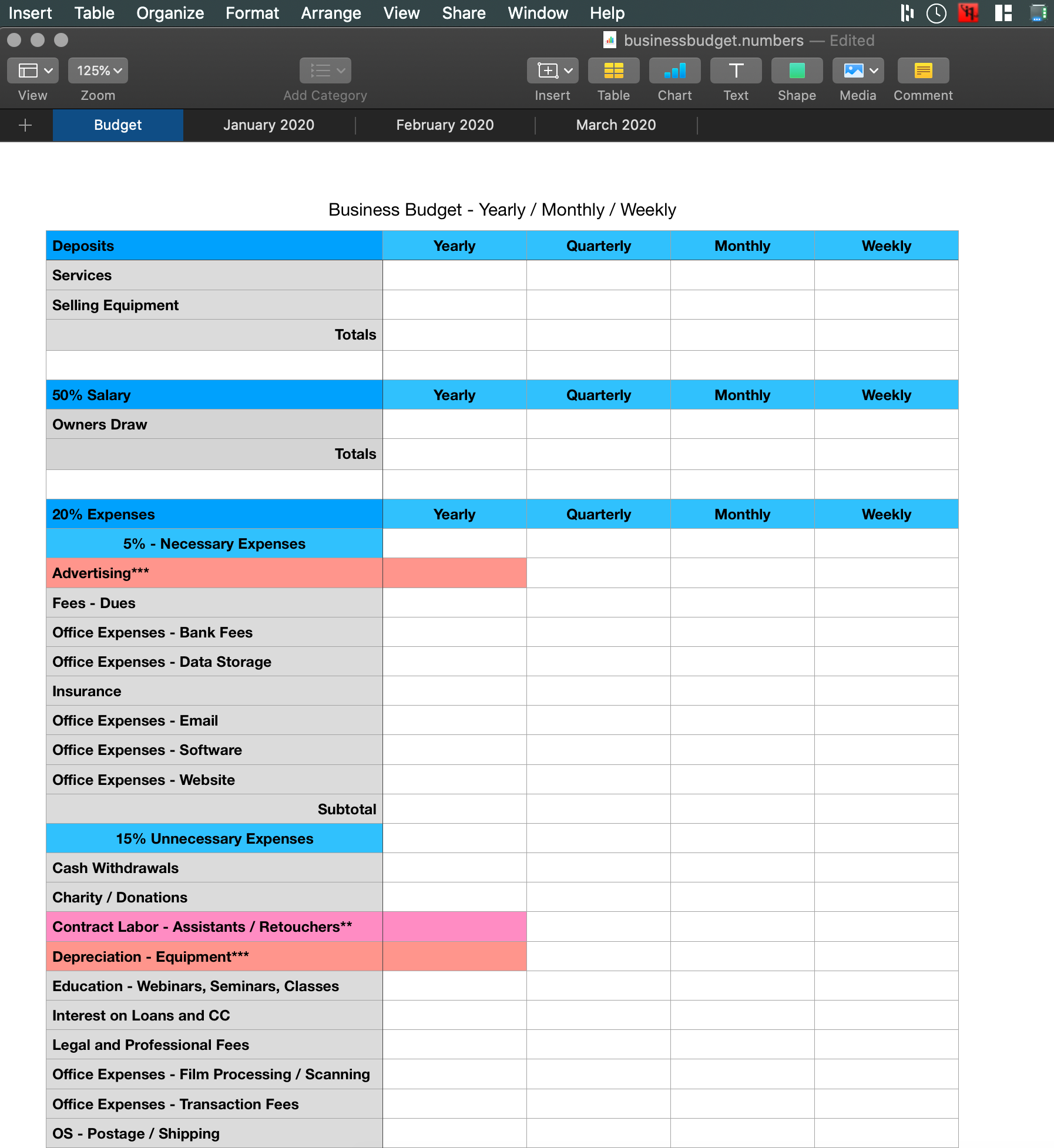
Sample of Joseph Ferraro’s 2020 Budget Sheet
Step Three • Interact and Engage, more:
Many people not-so-secretly loathe social media. I hear it ALL the time from pretty much everyone I know, even from those whose job it is to promote their company’s business where they work. Still, we all know how valuable engagement is, and that timely update about new work or some behind the scenes action is a crowd-pleaser. And, maybe that’s true. I do love people and could hang out for hours finding new things to talk about. And, I’ll admit, I get sucked into flipping through people’s stories because I DO want to know how everyone is doing and what cool things you’re up to. Still, I just can’t get myself to like the idea of curating content to digitally brand myself as what I already consider myself to be: a fun-loving dad and husband, who loves all things bread and food, who’s also a lovable, friendly photographer.
Be that as it may, as a business owner, I know that these tools are here for me to help promote my business and stay fresh in the minds of my clients and future clients. So, I’ll be making a more concerted effort to join the community in this 21st Century sort of way.


Step Four • Educate and Expand My Mind:
I’ve been intrigued by edX — the free, online college with courses from Harvard and MIT (and now more) since it began over a decade ago. I’ve completed a course in contract law and have always wanted the time to enroll in more.
So, I did!
Just the other day, I enrolled in a course in an Intellectual Property Law course, and a Social Media Marketing course. I have no need for another degree beyond my bachelor’s, for now. If I plan on teaching someday, then I’ll explore a master’s program, but for now, I’ll happily enroll in some online classes and learn some valuable things to support my business.

Also, how popular have podcasts become again? Amirite??
Step Five • Finding Inspiration and Creating New Images:

Museum of Fine Arts, Contemporary Arts Wing © Joseph Ferraro
My bookshelf is full of great inspiration. Architectural photography books of works by Julius Shulman, Ezra Stoller, and Marcel Gautherot are anthologies I can dive into for hours. I’ve even begun looking more closely at the scene painters of the seventeenth and eighteenth centuries — like Canaletto and Capriccio. And, if you haven’t been introduced to the renderings of Hatch Studio or MIR, please be prepared to clean your brains off of your desk.
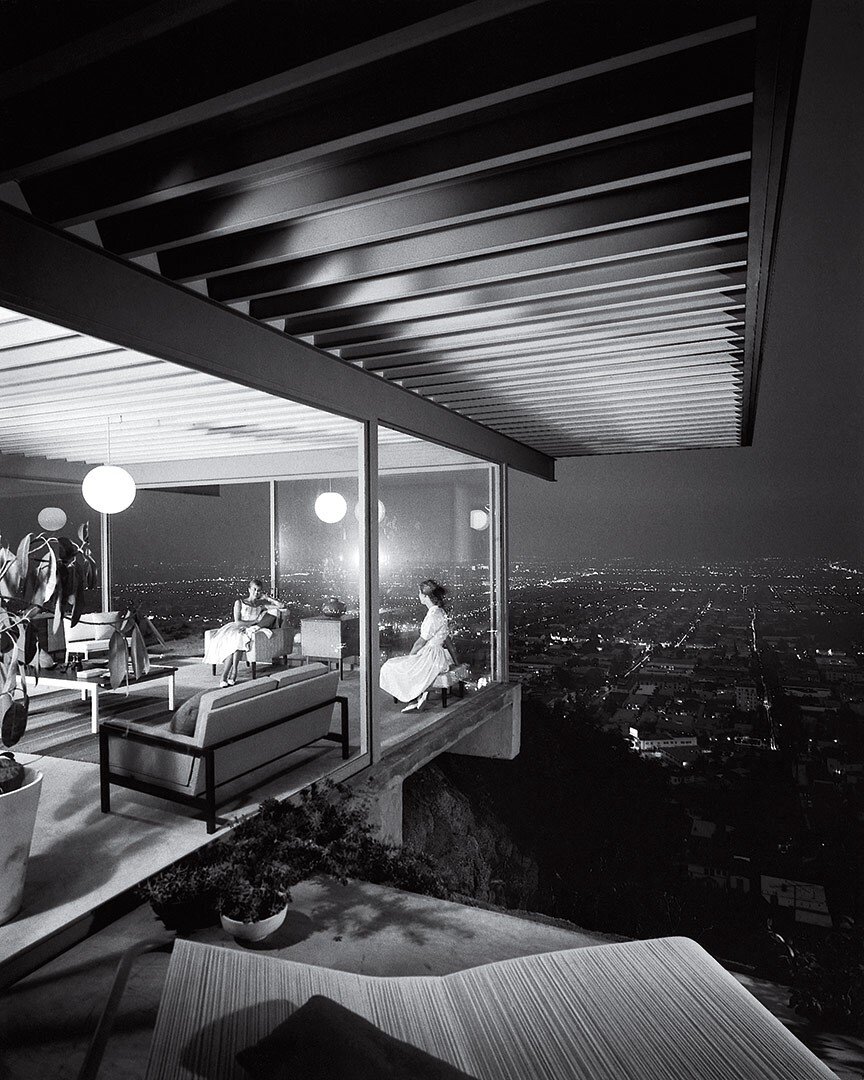
Case Study House 22, Los Angeles, CA © Julius Shulman
Also, a subscription to one of the most beautiful magazines, Cereal, has been landing on my doorstep lately. If there’s ever been a time to experiment with lighting and designing an aesthetic that could uniquely be my own, it’s now. If we’re fortunate enough to use this time to expand our abilities, this could be the most valuable place we put our time.
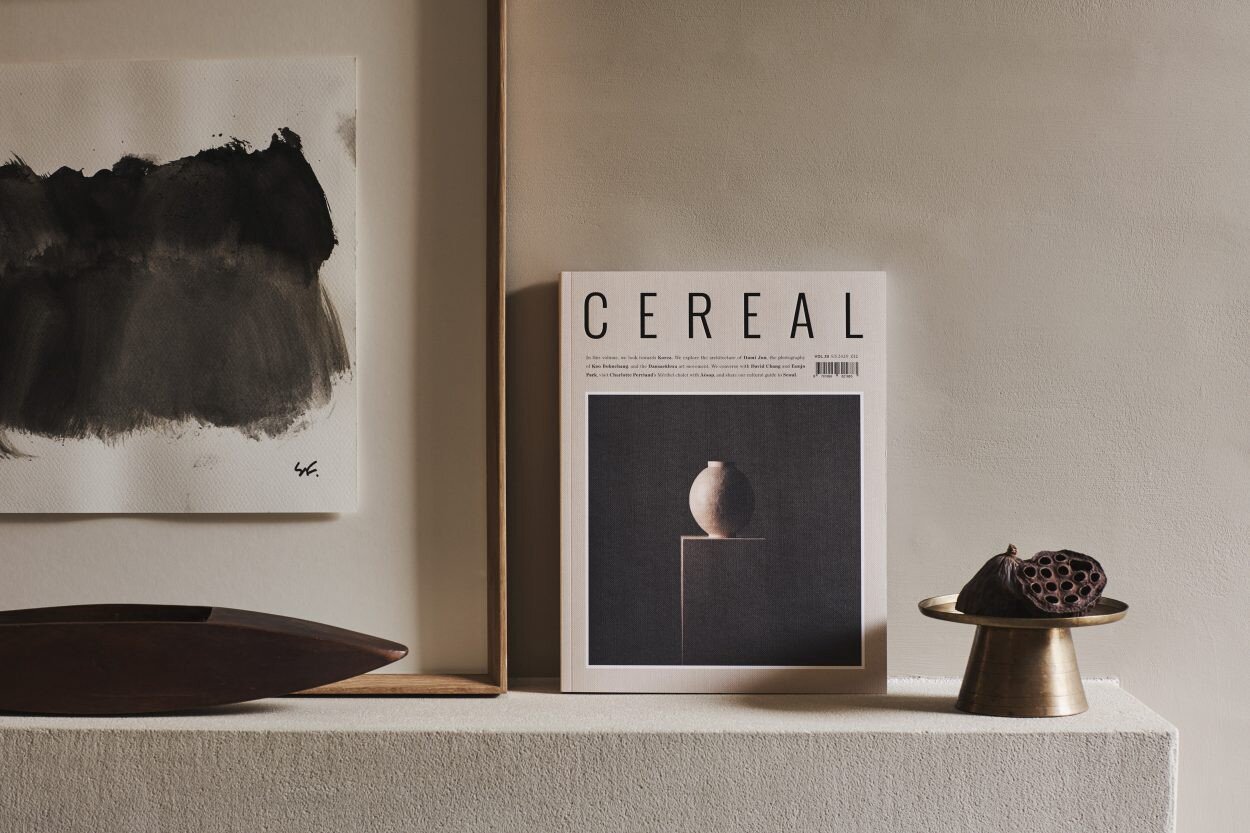
Cereal Magazine https://www.readcereal.com/
Step Six • Self-Care:
Eating well, letting my mind wander during times of boredom, meditation, putting a few pencils and sketchbooks to use, reading a book or two, (or four), and keeping a regular schedule during the workweek, are all ways I’ll be taking care of myself. Because being mindful of my health and maintaining a sense of calm will allow me to focus on my goals and support my family in ways that we have more time to appreciate now.
Step Seven • Help Others:
And, that brings me to my final step. Taking care of loved ones and your neighbor. It doesn’t take much to notice when someone else might need a bit of help. And, if you’ve been taking care of yourself, then it should be easy to reach out and help others. But, given the circumstances surrounding this virus, I do find it difficult as we’re supposed to keep safe distances from each other to prevent the spread of this.
So, if all you feel safe doing is helping your own family, then that’s a start. But, as things return to normal, just know that not everyone may be able to bounce back as strongly as the rest, and people still may need help when it may seem like everything’s normal in your bubble.
I’m going to continue doing what I can to be here when things return to normal.
If, in the interim, there is anything I can do for you, please let me know!
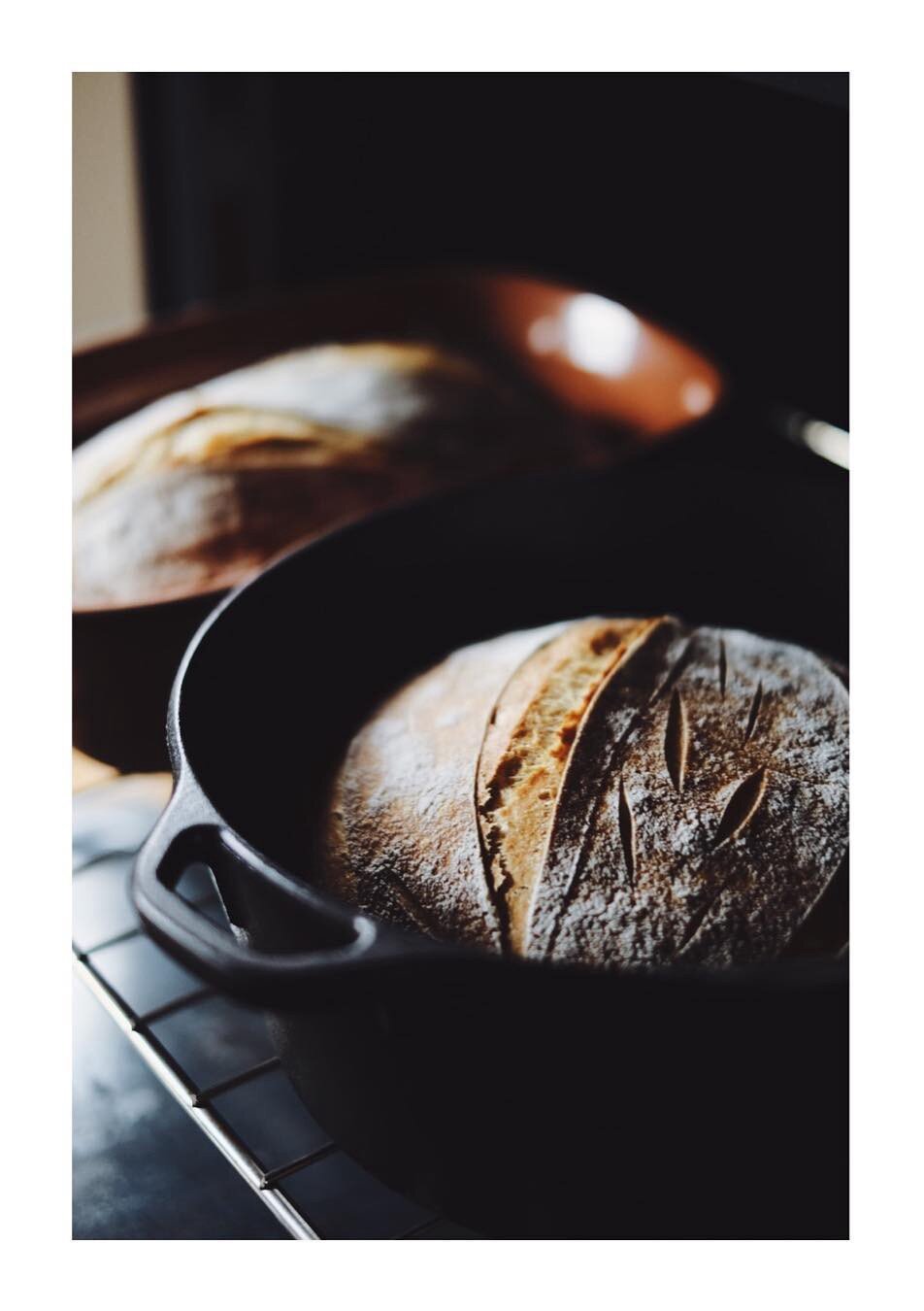
Personal Passion: Sourdough Bread Baking @leotheleaven
I’ll also be sure to share more writings and some insights into the photography world and post new images as I create them during the inspiration-stage of my sheltering-in-place time at home.
Please be safe and take care. I look forward to being behind the camera again for my clients and showing the world just how amazing the creators are who design the places and spaces all around us.
- Joe